What the centre does
A boar stud houses the boars and collects semen; an insemination centre prepares and uses it. In many farms these functions share one building. The goal is steady, timed breeding with clean handling at every step, because small problems in semen quality or hygiene show up as returns to heat and fewer piglets.
Stud, AI centre or bought semen?
| Option | What you build | Points to weigh |
|---|---|---|
| Own boar stud and laboratory | Boar pens, collection room, laboratory, storage | Control of genetics and timing; needs skilled staff and enough sows to use the doses |
| Insemination area only | Sow breeding area, small semen storage | Lower cost and skill needed; depends on a semen supplier and on safe delivery |
| Natural service | Boar pens and mating pens | Simple; needs more boars and larger pens |
Bringing semen from outside is a biosecurity route as well as a supply route. The USDA guidance for pork producers advises accepting pigs and semen only with documented, verified sources (USDA APHIS). See ASF biosecurity for pig farms.
Boar housing
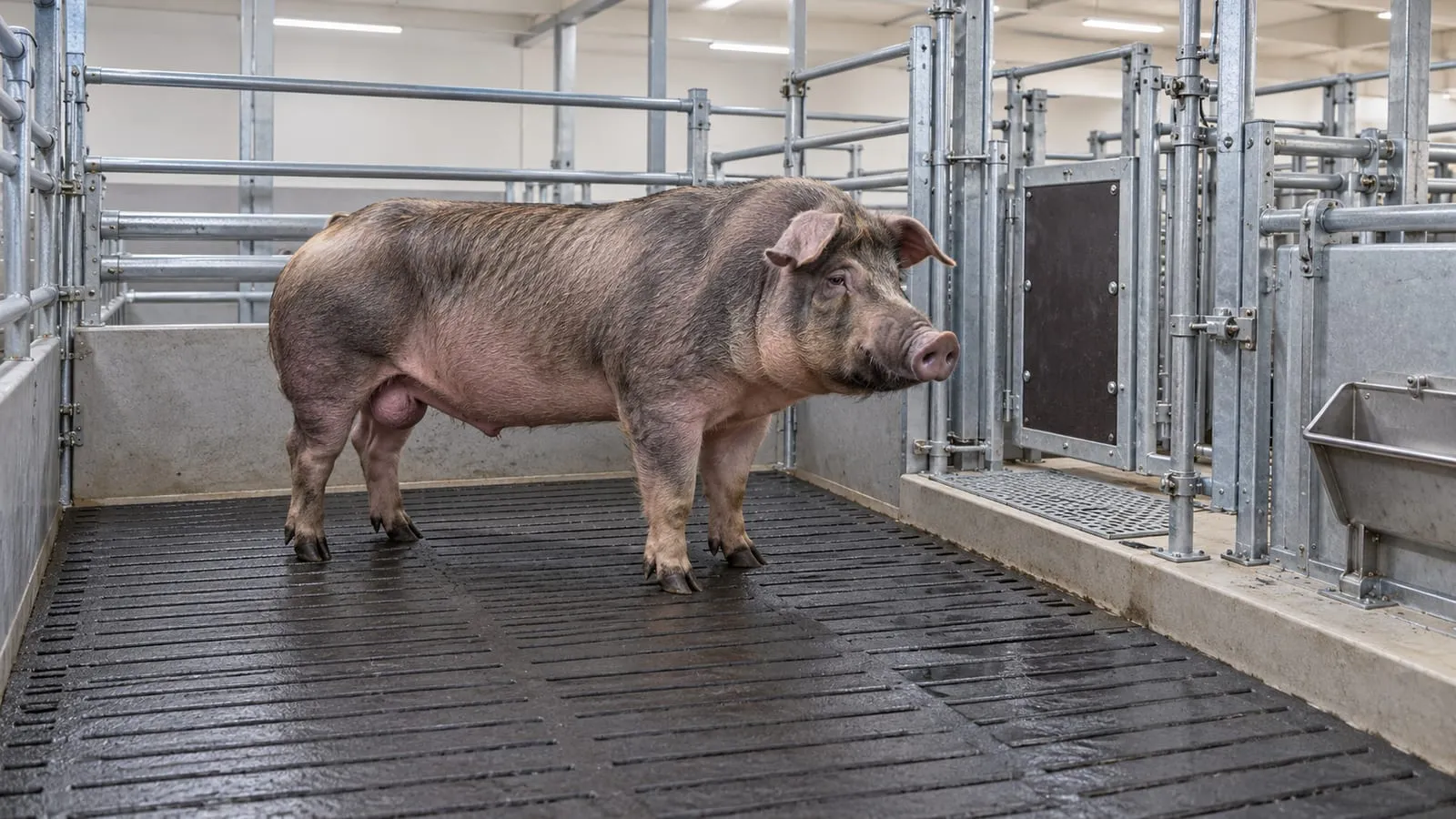
Under the EU welfare directive, the unobstructed floor area for an adult boar must be at least 6 m², and at least 10 m² where the pen is also used for natural service, free of obstacles. Pens must allow the boar to turn around and to hear, smell and see other pigs (Council Directive 2008/120/EC, Annex I, Chapter II, Section A). Other countries have their own rules; check yours.
Plan boar pens with a safe passage to the collection room, easy-to-clean floors and walls, good ventilation and cooling, since heat reduces boar fertility. See boar pens.
Collection room and laboratory
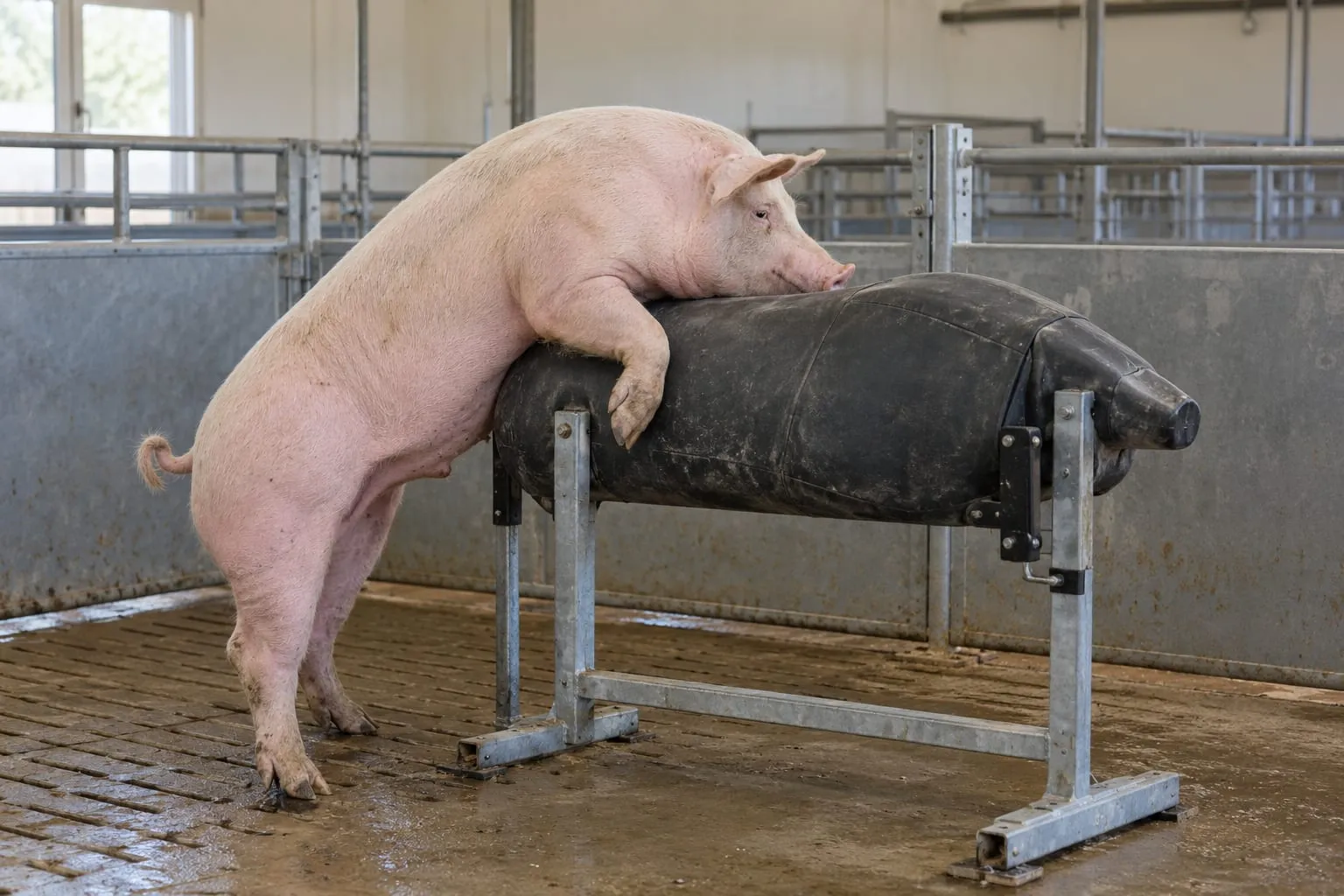
- Collection room: a non-slip floor, a dummy sow, enough room for the boar and the technician, and a safe exit.
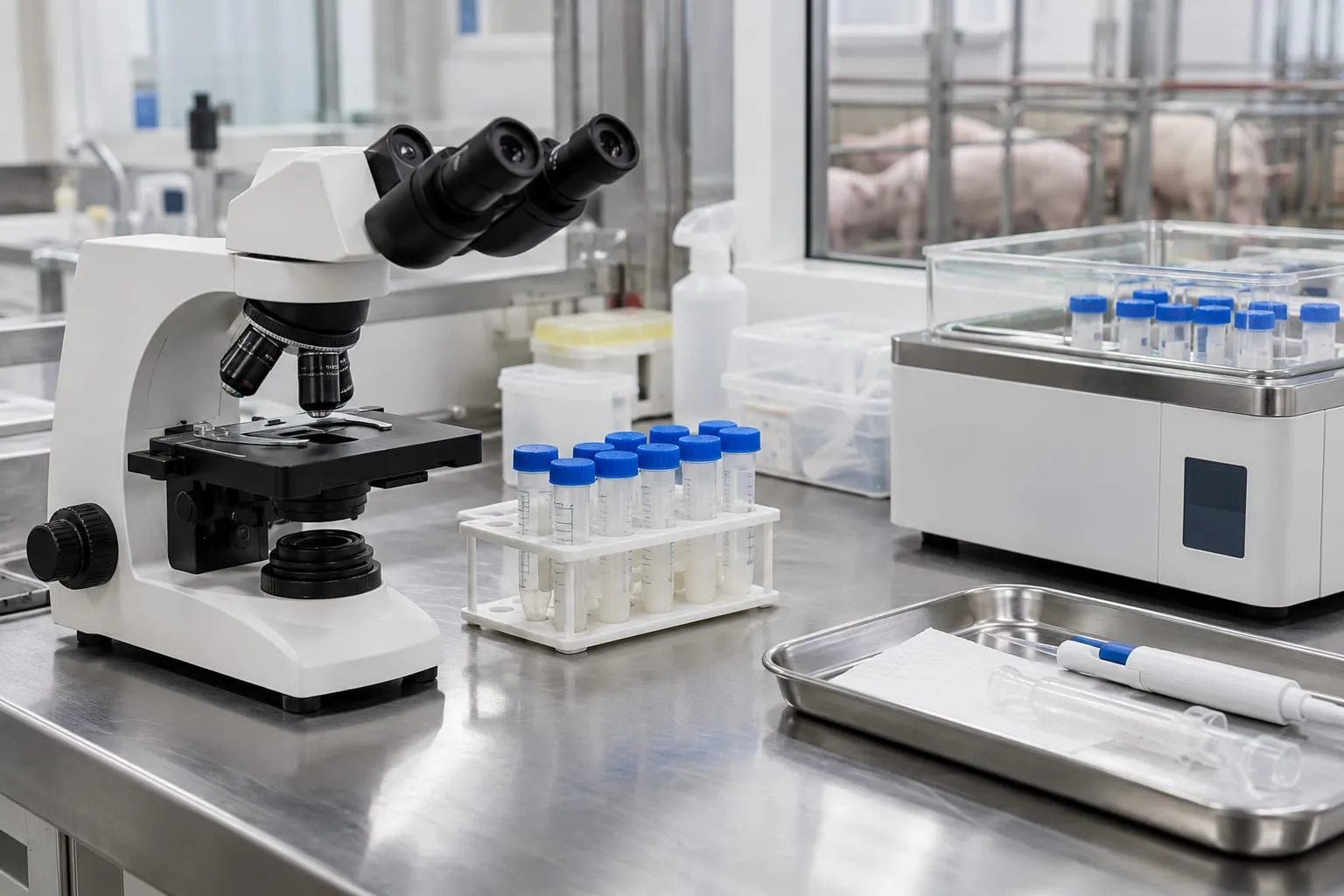
- Laboratory: next to the collection room, with a clean entry, a bench, a microscope, a water bath, dilution equipment and a storage cabinet. See semen processing equipment.
- Storage: studies hold extended boar semen at about 15-18 °C. A review reports that many extenders support storage for only about 3-5 days, with fertility tending to fall as preservation time grows (Indian Journal of Animal Sciences, we read a summary). Keep stored semen where temperature is stable and away from sunlight.
- Quality control: check motility and morphology, discard poor ejaculates and record each batch.
Industry sources report that an AI centre may discard up to 10% of ejaculates for poor motility, abnormalities or bacterial contamination (we read a summary of the industry material), so plan for the real yield, not the ideal.
Sizing the stud
Size the stud from your herd and breeding schedule:
- Doses needed per week = sows to be bred each week × doses per breeding.
- Doses per boar per week: a study of seven US boar studs covering 1,646 boars found 31.4 usable doses per boar space per week, and a North American survey of 44 studs reported 21-40 doses per boar per week (Journal of Swine Health and Production; WATTAgNet survey; we read summaries). The same sources note that output varies with boar age and collection interval; the survey reported collections commonly twice a week with 3-7 days of rest between.
- Boars needed = doses per week ÷ doses per boar per week, plus replacement boars and spares.
An illustration with assumed figures (replace them with your own): a 300-sow herd with weekly batches has about 13 farrowings a week (see the sow farm planning calculator). With a farrowing rate of 90%, about 15 sows are bred per week; at 2-3 doses per breeding that is about 30-45 doses a week. At 21-40 doses per boar per week, that is one or two boars in production, with others in training or spare. A reproduction adviser should confirm the numbers for your genetics and management.
Layout principles
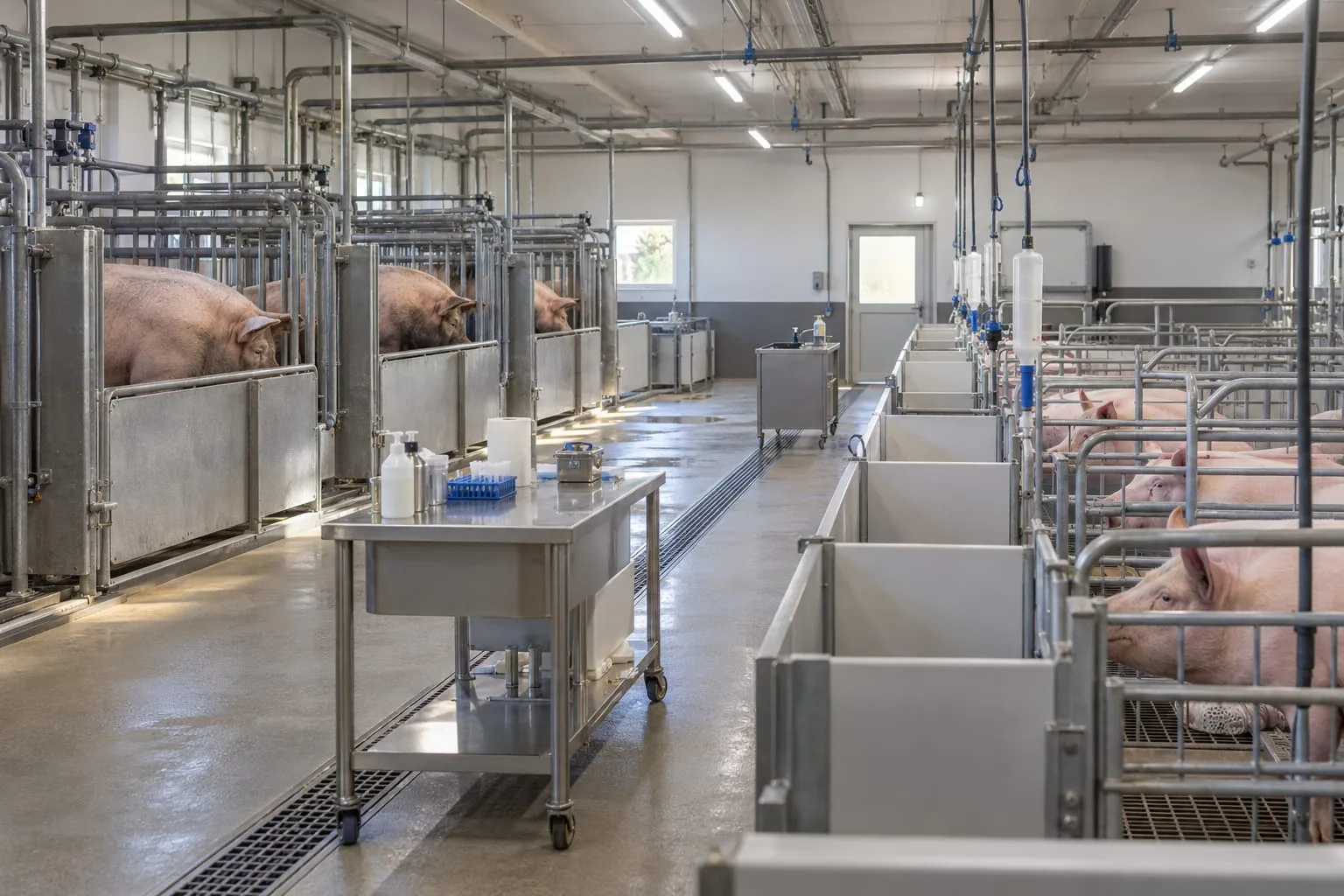
- Clean and dirty flows apart: boars and collection on the dirty side, laboratory and storage on the clean side, with a pass-through for semen.
- Short, safe routes: boars move to the collection room without crossing sow areas.
- Laboratory next to the collection room: semen should not wait or travel far.
- Observation: sows in the breeding area must be easy to see for heat and insemination. See mating and gestation house.
- Isolation: keep an isolation area for new boars before they join the stud.
- Entry control: a changing area and a line between dirty and clean for staff and visitors. See vehicle wash and staff entry design.
For the whole farm layout see pig farm layout and site selection.
Equipment
- Boar pens and collection rooms with a dummy sow.
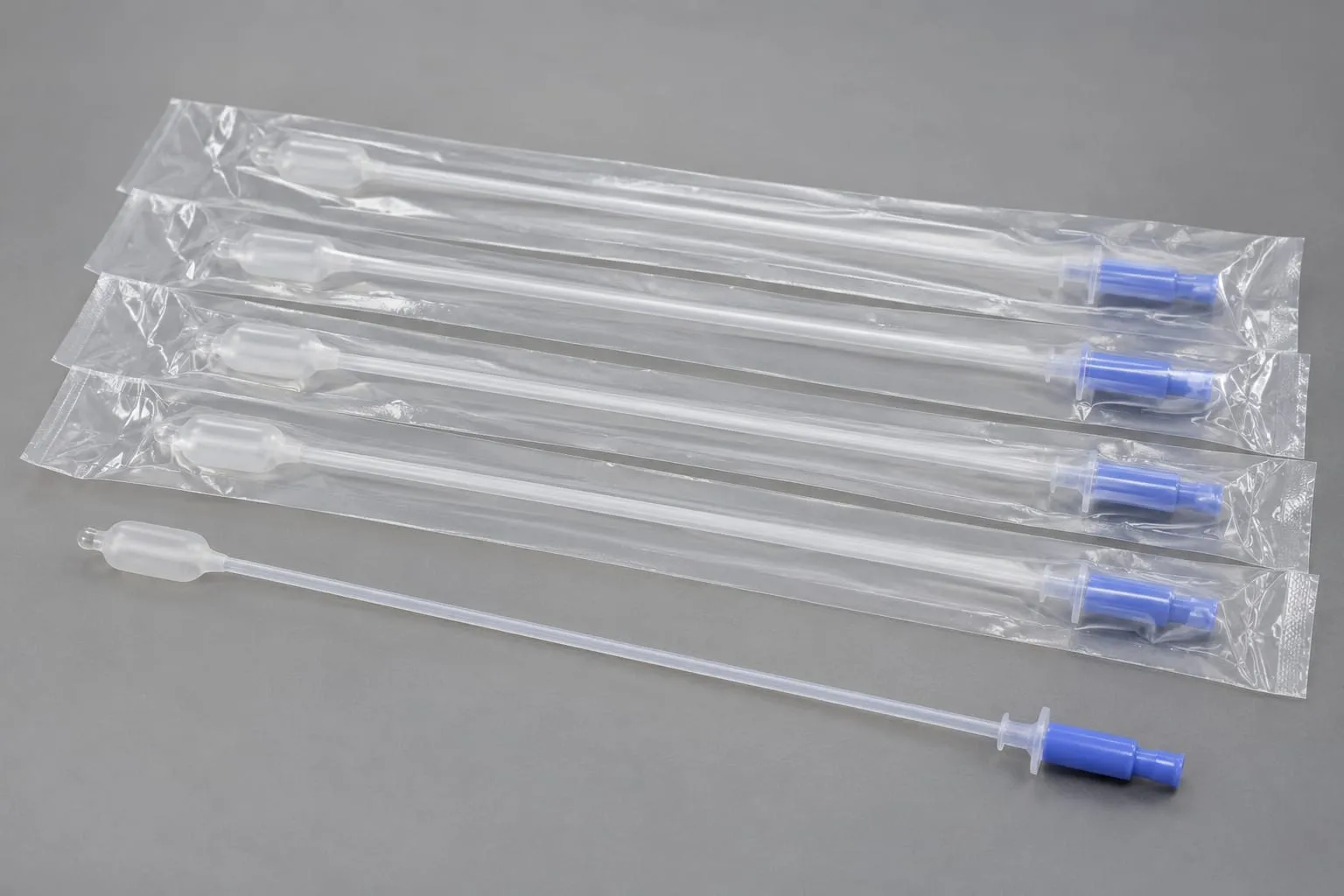
- Semen processing equipment and insemination catheters.
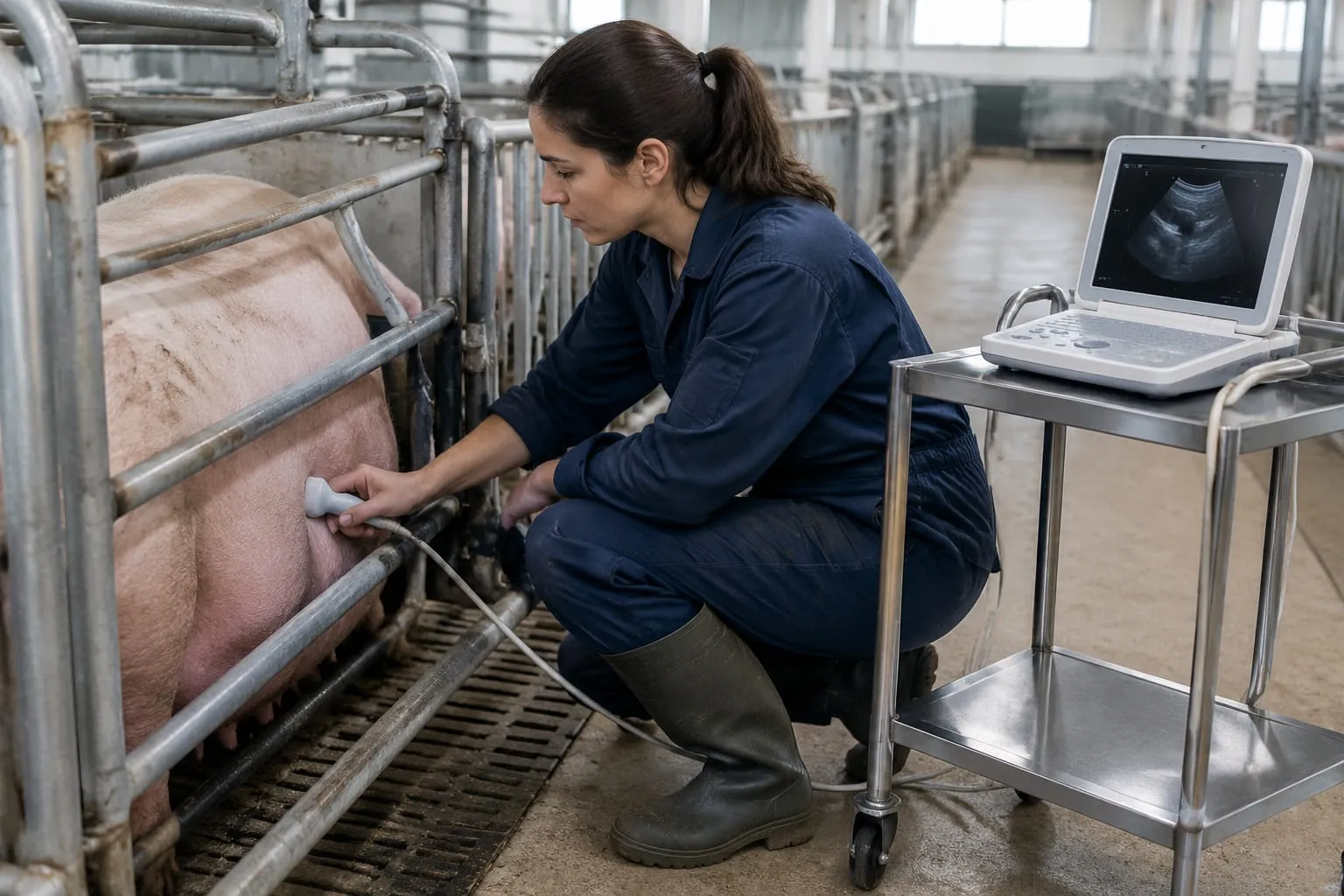
- Pregnancy scanners for early checks.
- Insemination centre packages for a combined set.
A checklist before you build
- Decision made: own stud, insemination area only, or bought semen
- Boar pens meet your space rules and give the boar sight and smell of other pigs
- Collection room with a safe floor, dummy sow and exit
- Laboratory next to the collection room with a clean entry
- Storage at a stable temperature and a record for each batch
- Number of boars sized from doses needed per week
- Clean and dirty flows, isolation area and entry control
- A named person responsible for quality control
Ask an expert to plan your centre
Send us the herd size and breeding schedule, and we propose a centre layout and an equipment list through the contact page.