Skip to content
HNYZ Group logo

C · 12 products

Pig Pen Systems and Crates

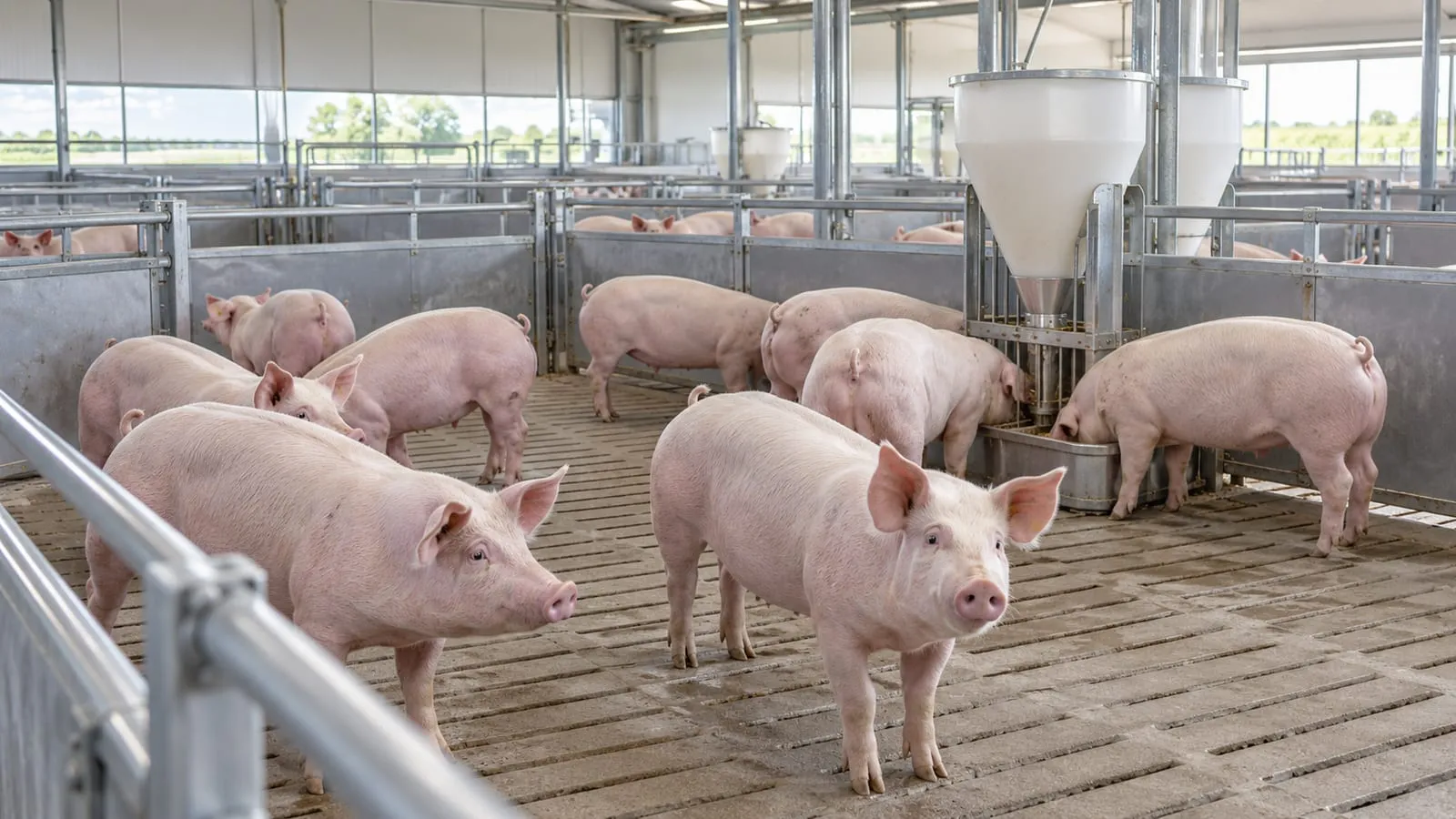
Pens and crates set how much space each pig has, how safely staff can work and how fast a room can be washed. This range covers every stage from farrowing crates and gestation stalls to nursery, finishing, gilt and boar pens.

12
Products
7
Solutions
Yes
Customised to project
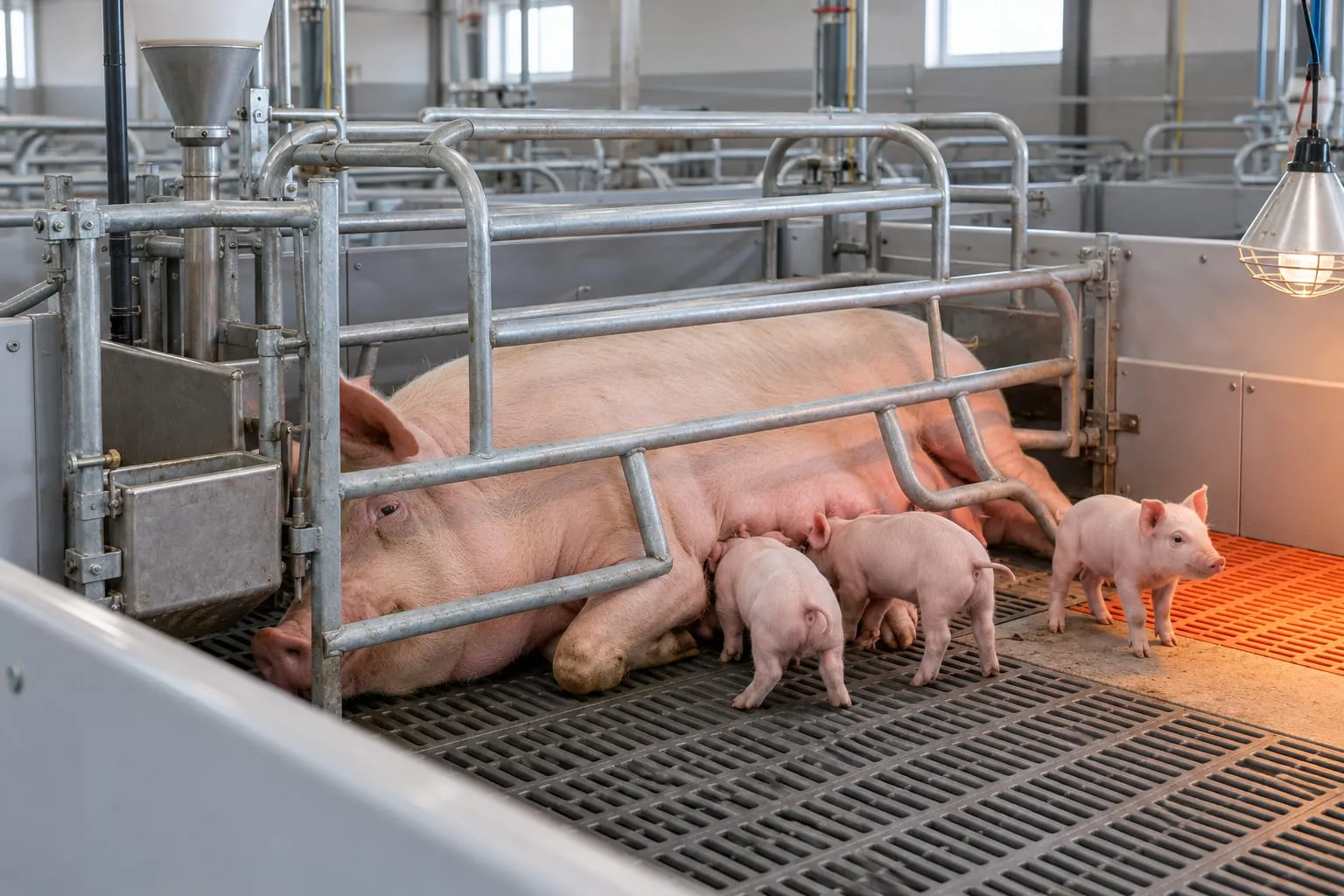
Farrowing Crates for a pig farm

Products in this category

Each product can be customised to your project. Reference values are typical and are confirmed before quotation.

  • C01

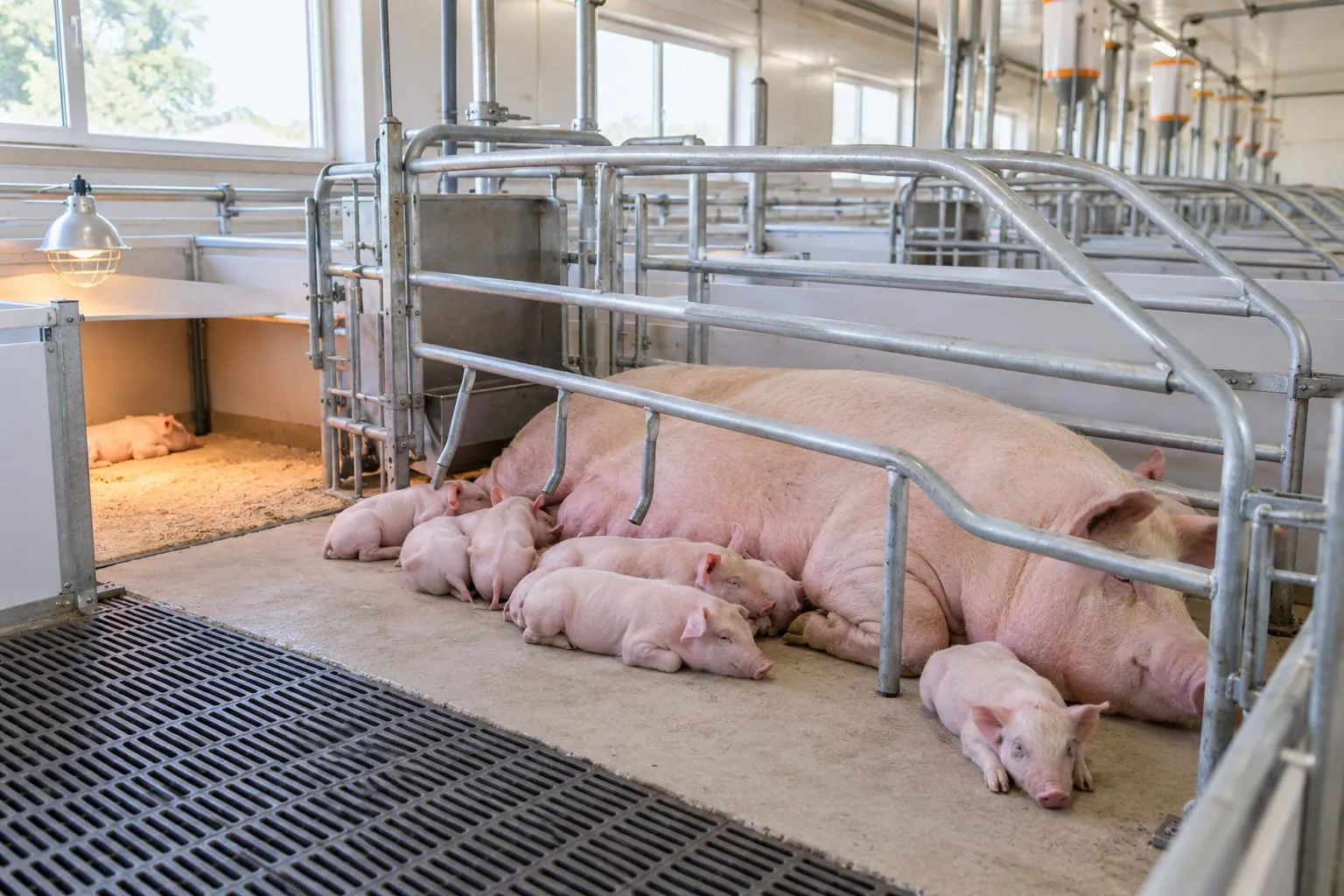
    Farrowing Crates

    Crates that hold the sow safely during farrowing and lactation and protect piglets from being crushed.

    • Protects piglets during and after farrowing
    • Safe access for the stockperson
    • Used with creep heating, feeder and drinker
    Typical sow space
    About 2.1–2.4 m long × 0.55–0.70 m wide (reference)
    Typical full pen
    About 2.2–2.4 m × 1.8–2.2 m including the creep area (reference)
    Frame
    Hot-dip galvanised steel tubes
  • C02

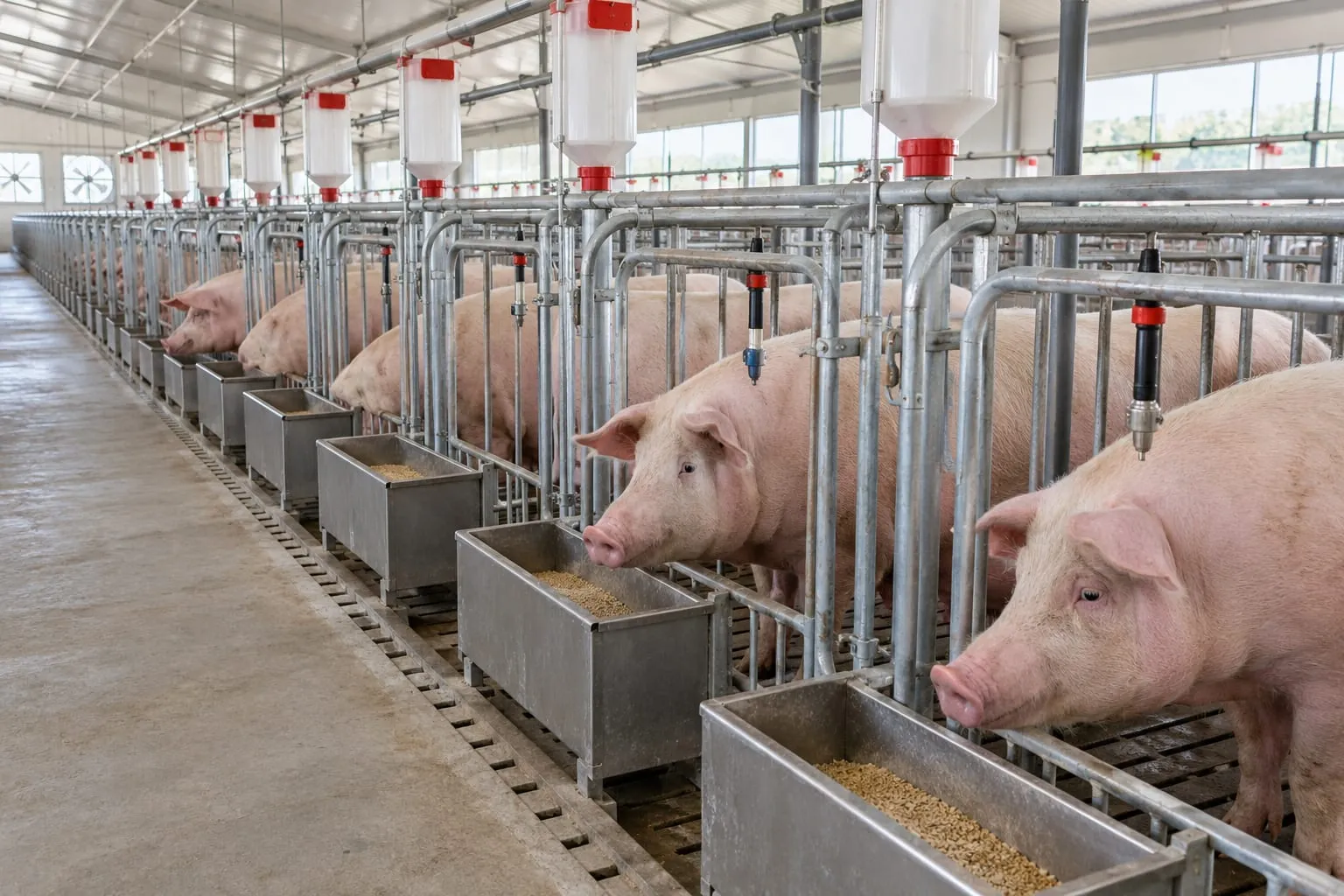
    Gestation Stalls

    Individual stalls that let each sow be fed and checked on her own during gestation.

    • One feeder and one drinker for every sow
    • Easy individual feeding and observation
    • Galvanised steel, built for repeated washing
    Typical stall size
    About 2.0–2.2 m long × 0.60–0.70 m wide (reference)
    Layout
    Single or double rows
    Frame
    Hot-dip galvanised steel
  • C03

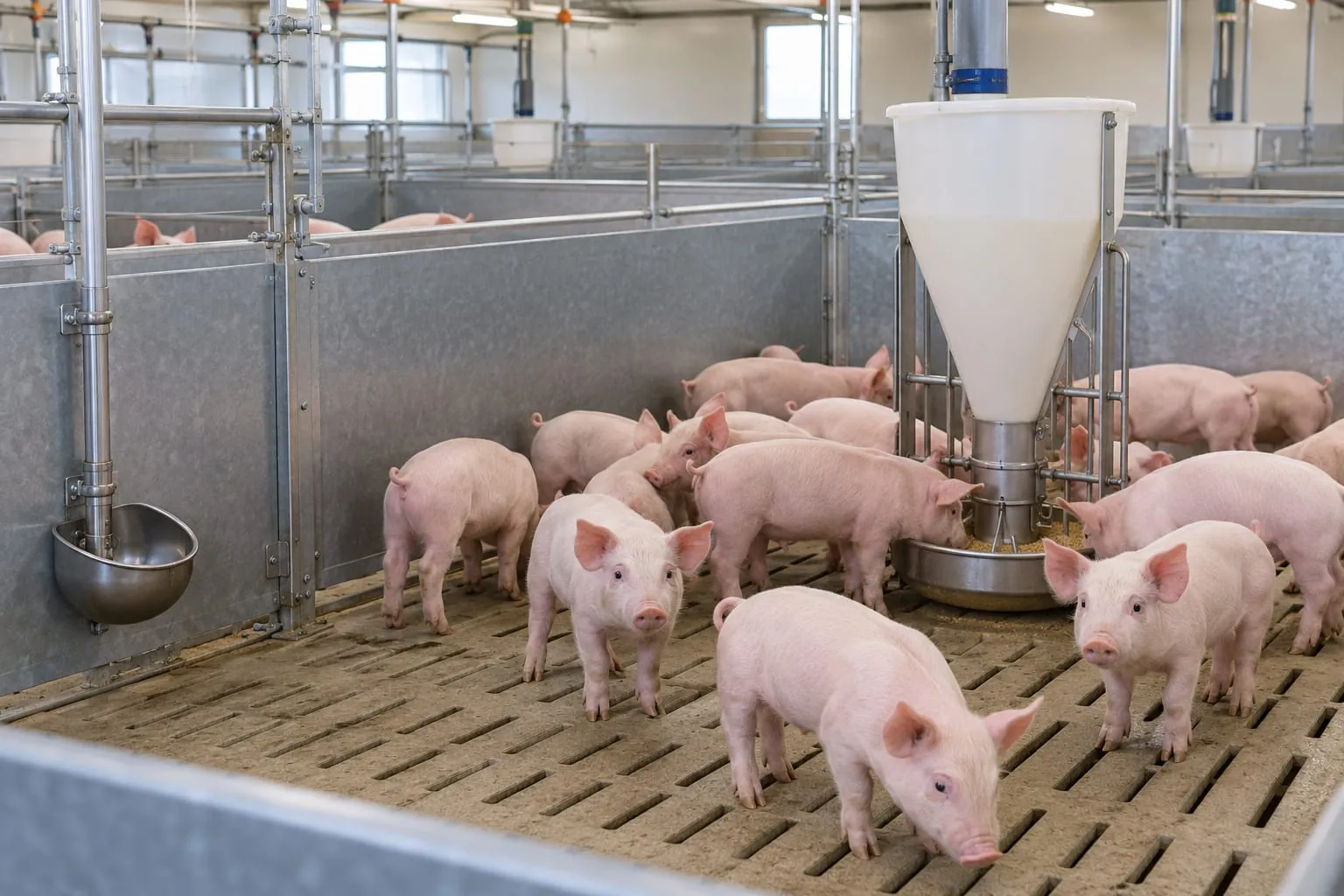
    Nursery Pens

    Pens for weaned piglets with a feeder and drinker, sized for the weaning-to-transfer period.

    • Group size and space matched to piglet weight
    • Hopper feeder and drinker in each pen
    • Slatted floor keeps the pen dry and clean
    Typical space
    About 0.3–0.4 m² per pig (reference)
    Typical group size
    10–30 piglets
    Panels
    Galvanised frame with PVC or steel panels
  • C04

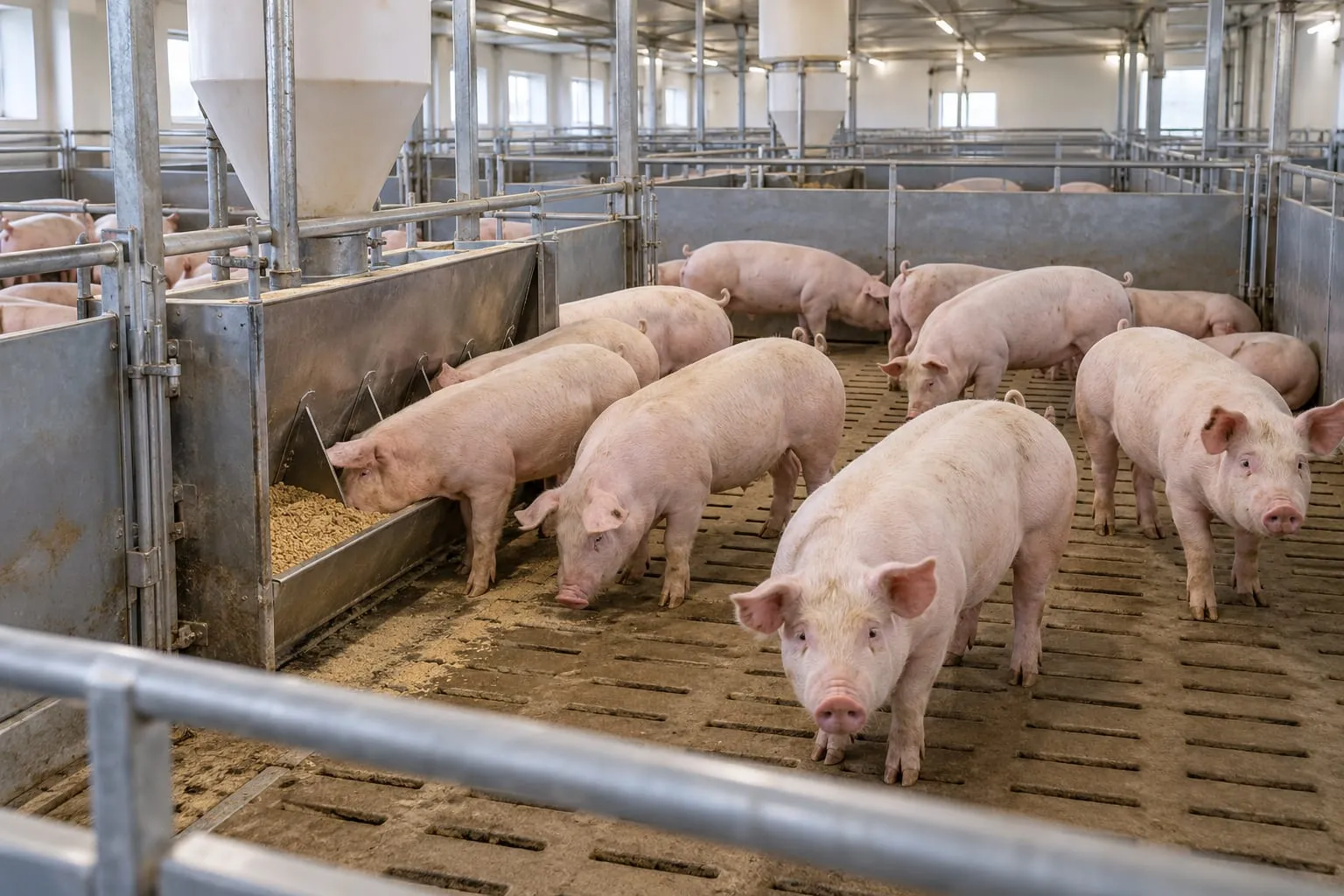
    Finishing Pens

    Pens for growing and finishing pigs, designed around stocking density and easy feeding.

    • Strong panels and gates for heavy pigs
    • Feeder space and drinker access planned per pig
    • Easy to wash between batches
    Typical space
    About 0.7–1.0 m² per pig, by market weight and local rules (reference)
    Typical group size
    10–20 pigs (reference)
    Frame
    Hot-dip galvanised steel
  • C05

    Gilt Pens

    Pens for replacement gilts that are kept in groups before first breeding.

    • Group housing with enough feeder space
    • Good view of gilts for heat detection
    • Placed close to the breeding house
    Space per gilt
    Set by local rules and your plan
    Group size
    Set by the pen size and the breeding plan
    Frame
    Hot-dip galvanised steel
  • C06

    Boar Pens

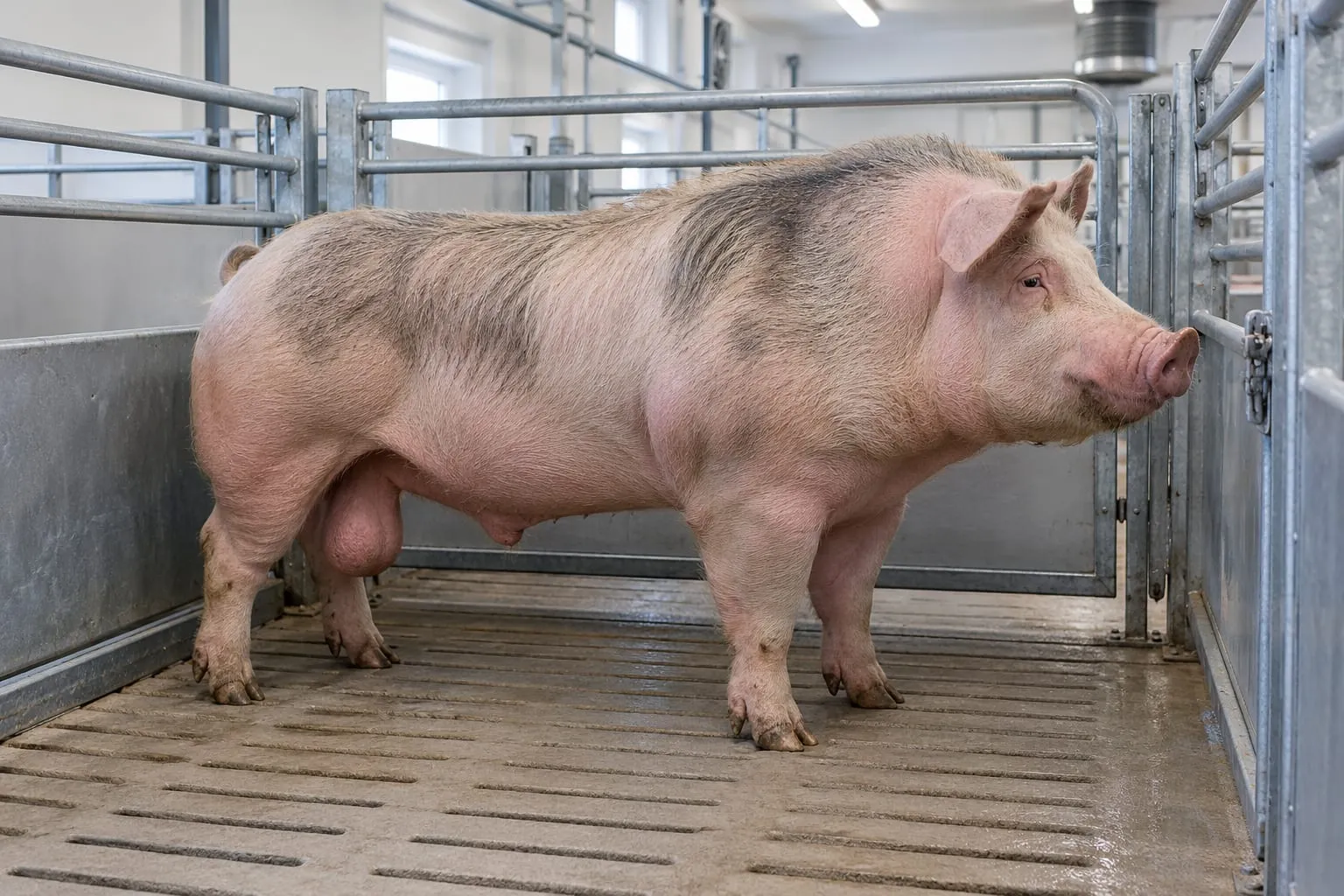
    Sturdy pens for boars, sized for safe handling and regular exercise.

    • Heavier frames and taller panels
    • Non-slip floor for legs and feet
    • Safe route to the collection area
    Typical pen area
    About 6–10 m² per boar (reference)
    Panel height
    Taller than for sows; set by the boar size
    Frame
    Hot-dip galvanised heavy tube
  • C07

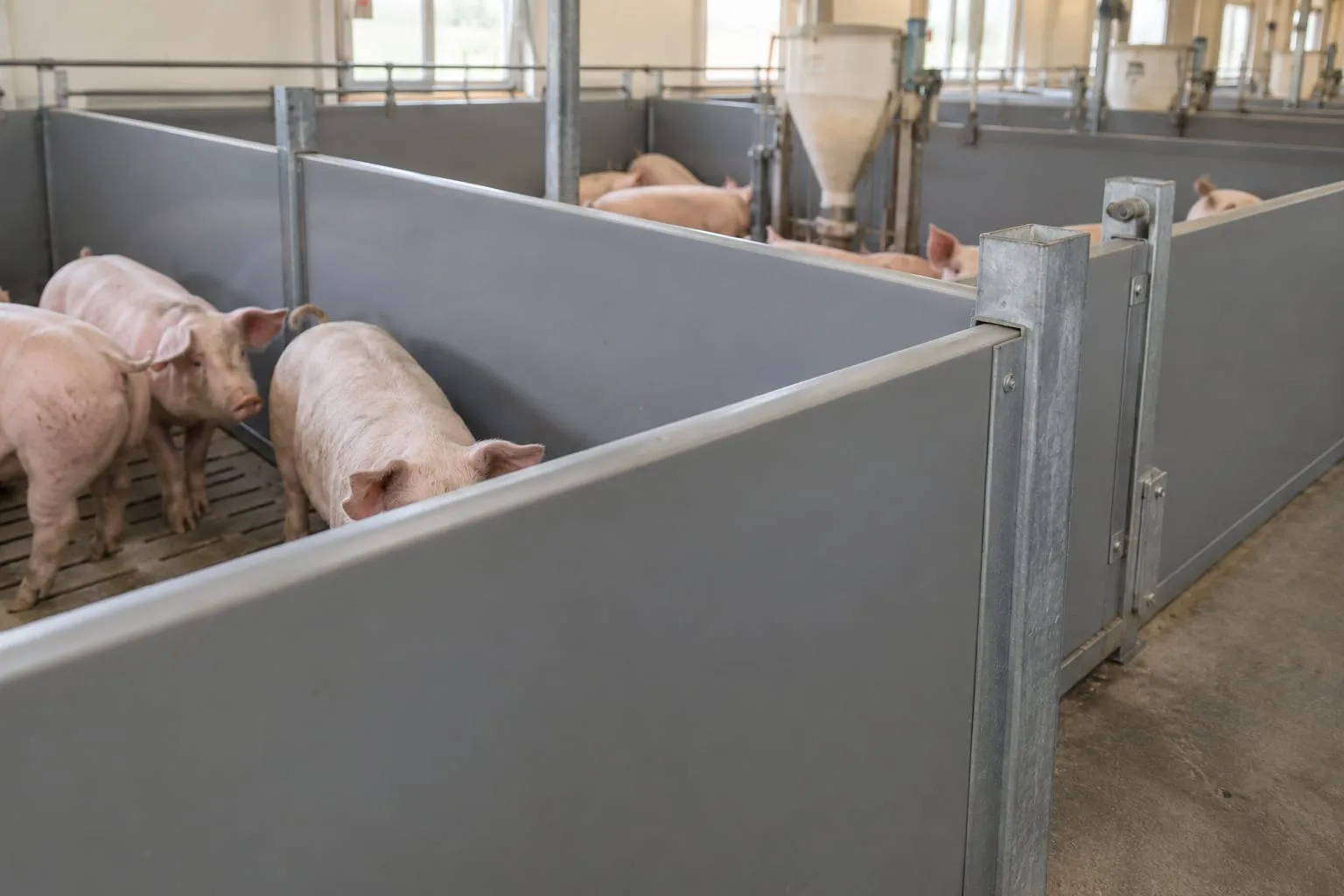
    PVC Pen Partitions

    Plastic panels that divide pens, are easy to wash and do not rust.

    • Does not rust, easy to wash
    • Slots into galvanised posts
    • Can be moved when the layout changes
    Material
    PVC (or similar plastic) panels
    Typical height
    About 0.6–1.2 m (reference)
    Posts
    Hot-dip galvanised steel
  • C08

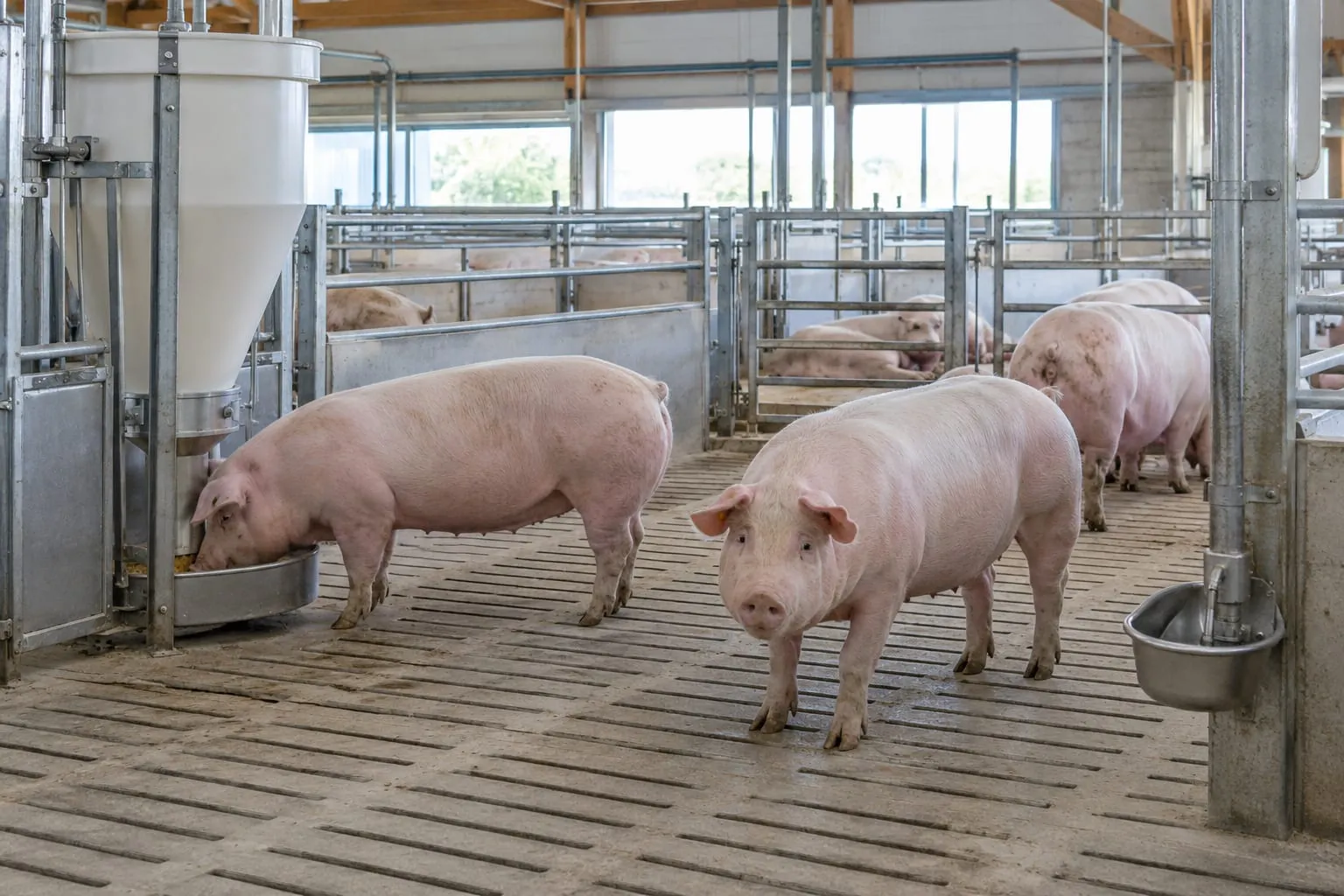
    Group Housing Pens for Sows

    Pens that keep gestating sows in groups with space for free movement and individual feeding.

    • Sows live in groups with room to move
    • Works with electronic sow feeding
    • Layout planned to reduce competition
    Space per sow
    Set by local rules; often about 2.0–2.5 m² (reference)
    Group size
    Static or dynamic groups
    Frame
    Hot-dip galvanised steel
  • C09

    Welfare Farrowing Pens

    Farrowing pens that give the sow more room, for markets with welfare requirements.

    • More room for the sow to move
    • Creep area and protected piglet zone
    • For markets with welfare requirements
    Typical pen area
    About 4–6 m² (reference)
    Sow movement
    Free or temporary confinement, per design
    Frame
    Hot-dip galvanised steel
  • C10

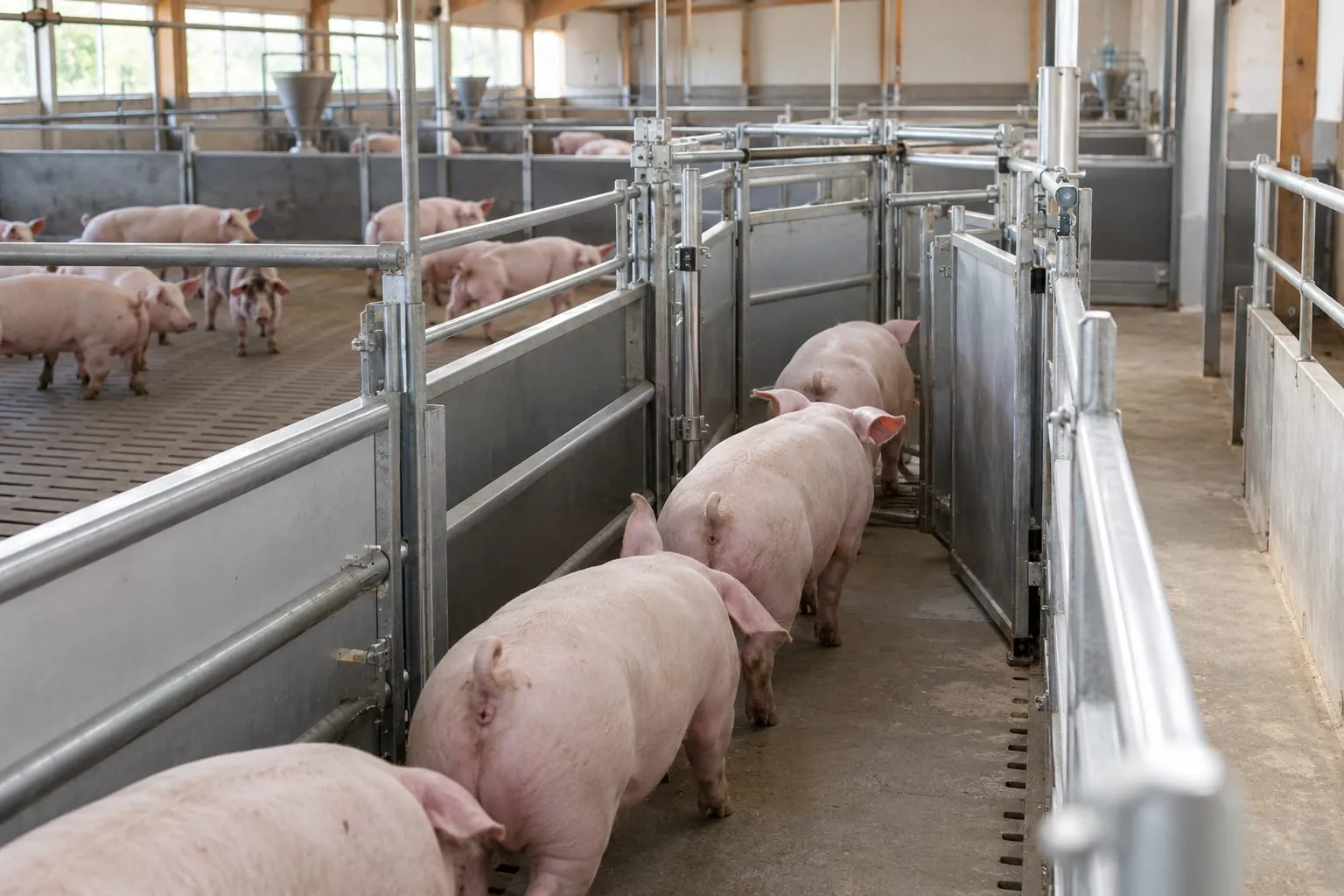
    Sorting Gates and Driving Alleys

    Gates and alleys for moving, sorting and weighing pigs with less stress.

    • Calmer, safer pig movement
    • Used for sorting and weighing
    • Galvanised steel for long life
    Typical alley width
    About 0.6–1.0 m (reference)
    Gate types
    Swing or sliding
    Material
    Hot-dip galvanised steel
  • C11

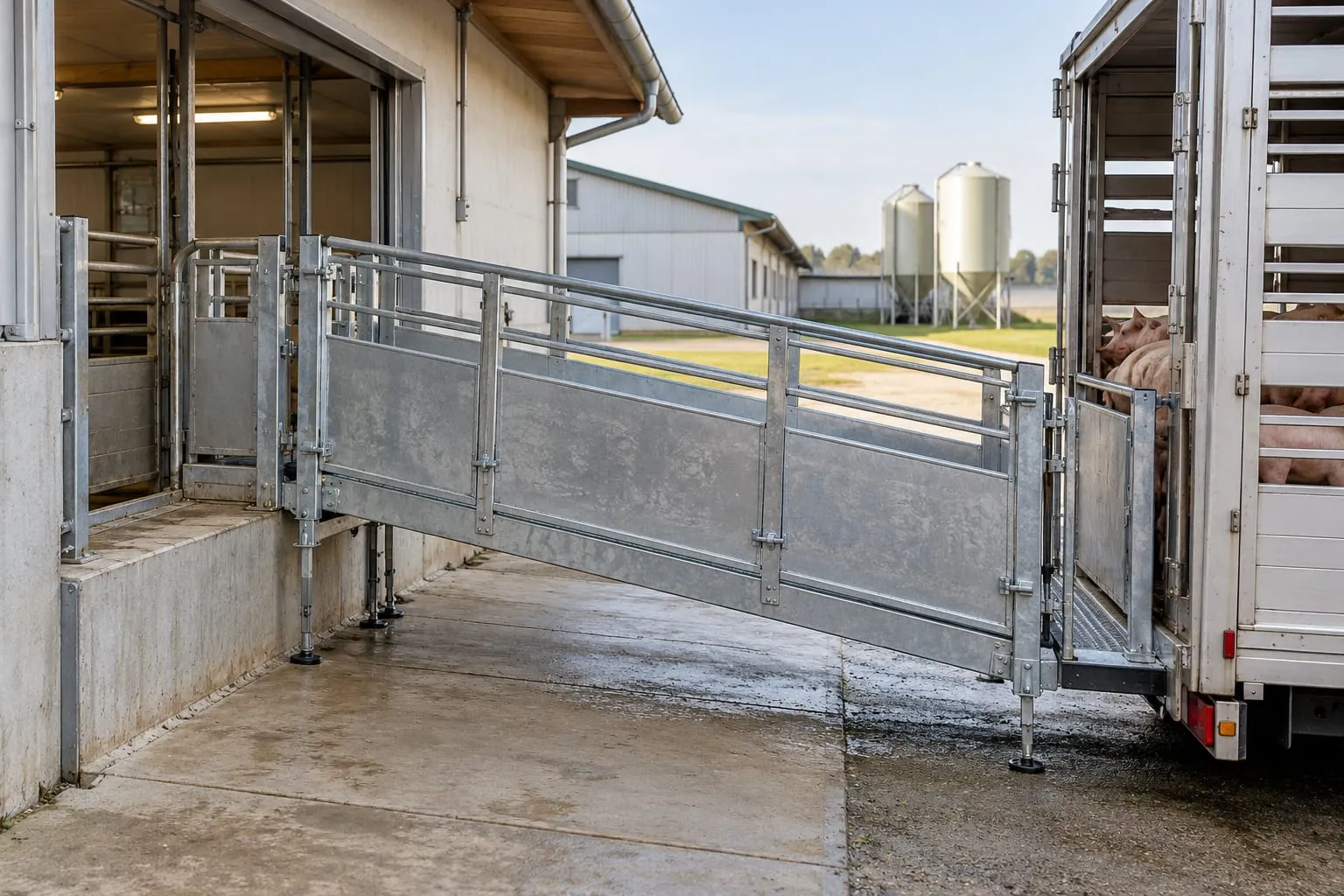
    Loading Ramps

    Ramps for loading and unloading pigs at the farm boundary.

    • Solid sides and non-slip surface
    • Keeps trucks away from the production area
    • Fixed or height-adjustable
    Slope
    Typically 20° or less (reference)
    Adjustment
    Fixed or height-adjustable
    Material
    Hot-dip galvanised steel with non-slip floor

Compare at a glance

Pen Systems: comparison
ProductWhat it doesTypical reference
Farrowing CratesCrates that hold the sow safely during farrowing and lactation and protect piglets from being crushed.Typical sow space: About 2.1–2.4 m long × 0.55–0.70 m wide (reference)
Gestation StallsIndividual stalls that let each sow be fed and checked on her own during gestation.Typical stall size: About 2.0–2.2 m long × 0.60–0.70 m wide (reference)
Nursery PensPens for weaned piglets with a feeder and drinker, sized for the weaning-to-transfer period.Typical space: About 0.3–0.4 m² per pig (reference)
Finishing PensPens for growing and finishing pigs, designed around stocking density and easy feeding.Typical space: About 0.7–1.0 m² per pig, by market weight and local rules (reference)
Gilt PensPens for replacement gilts that are kept in groups before first breeding.Space per gilt: Set by local rules and your plan
Boar PensSturdy pens for boars, sized for safe handling and regular exercise.Typical pen area: About 6–10 m² per boar (reference)
PVC Pen PartitionsPlastic panels that divide pens, are easy to wash and do not rust.Material: PVC (or similar plastic) panels
Group Housing Pens for SowsPens that keep gestating sows in groups with space for free movement and individual feeding.Space per sow: Set by local rules; often about 2.0–2.5 m² (reference)
Welfare Farrowing PensFarrowing pens that give the sow more room, for markets with welfare requirements.Typical pen area: About 4–6 m² (reference)
Sorting Gates and Driving AlleysGates and alleys for moving, sorting and weighing pigs with less stress.Typical alley width: About 0.6–1.0 m (reference)
Loading RampsRamps for loading and unloading pigs at the farm boundary.Slope: Typically 20° or less (reference)
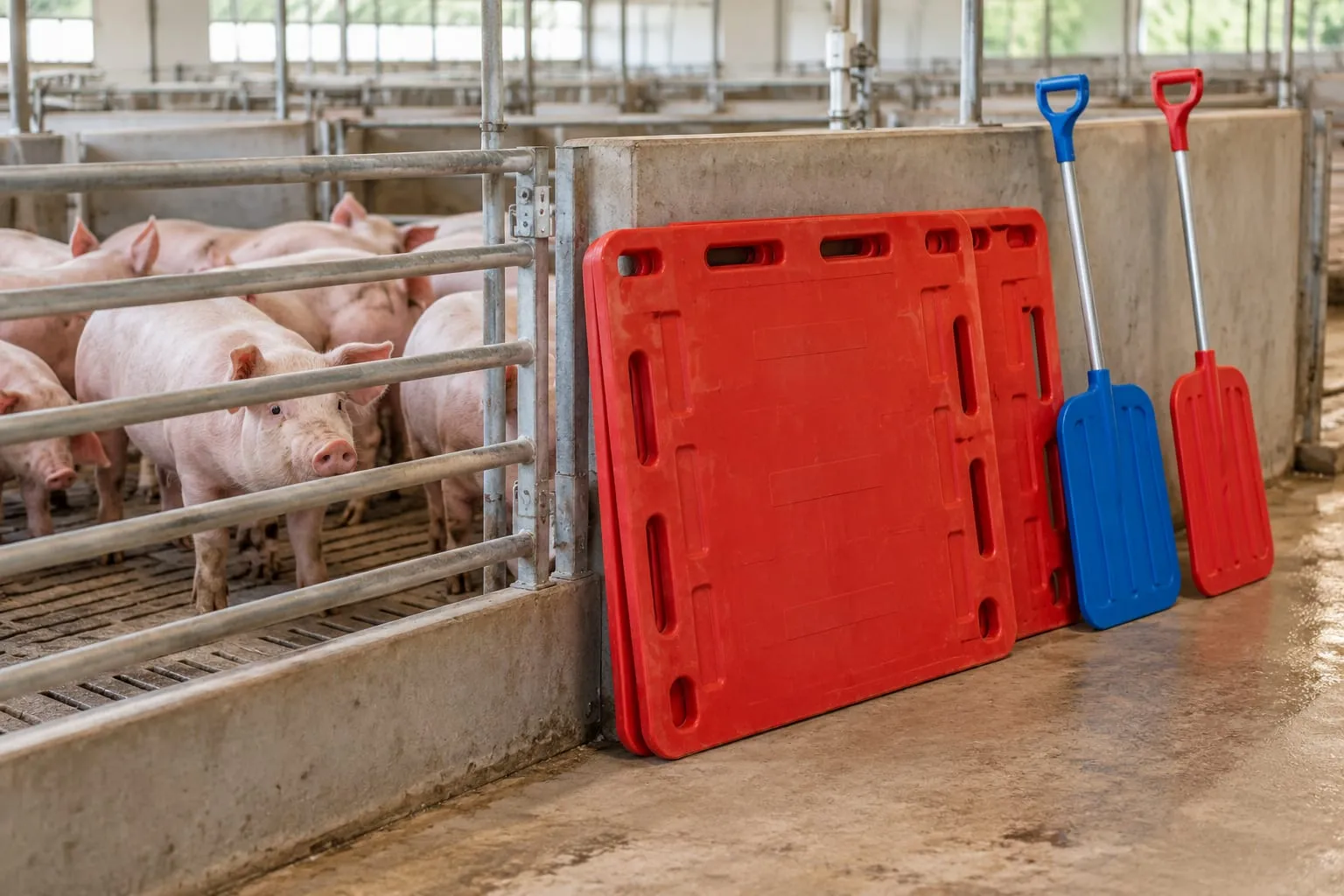
Pig Sorting Boards and Hand ToolsPlastic boards and handling tools for moving pigs without injury.Material: Plastic (PP or similar)

Selection guide

How to choose

  1. 1

    Choose by stage

    Farrowing, gestation, nursery, finishing and boar pens each have their own size and fittings.

  2. 2

    Check local welfare rules

    Rules on sow confinement and space per pig differ between countries and affect the pen type.

  3. 3

    Pair pens with floors

    Pen and flooring are designed together so that slots, supports and drains fit.

  4. 4

    Plan the fittings

    Feeders, drinkers and creep areas are part of the pen, not an afterthought.

Frequently asked questions

Are pens made of galvanised steel?

Frames are hot-dip galvanised steel for long life in a wet house. Panels can be steel or PVC, depending on the stage and your preference.

Can pen sizes be changed?

Yes. Dimensions are set by the pig size, group size and local welfare rules, and the layout can be customised for the house.

Do you supply flooring with the pens?

Yes. Plastic, cast iron and concrete slats are available, and we match them to the pen type.

Do you supply both steel and PVC panels?

Yes. Steel is used for frames and open fronts; PVC panels are used for solid sides that are easy to wash.

Can you match pens I already have?

Often yes. Send us drawings or photos with dimensions and we check how to match them.

How are pens packed?

Pens are packed in bundles or crates for sea or road transport. Packing is agreed per order.

Are sizes and configurations fixed?

No. Dimensions, materials and configuration are customised to your herd size, climate and local rules, and agreed with you before quotation.

Are the specifications on your product pages final?

They are typical reference values to help you compare. Final specifications are confirmed with you before quotation.

Who installs the equipment?

Our installation teams install and commission the equipment. The scope for each project is agreed in the contract.

What warranty do you give?

Warranty terms depend on the equipment and are agreed per project in the contract.

All frequently asked questions →

Enquiry

Tell us about your project

Share your herd size, land and target market — we will come back with a layout and an equipment list.

What happens next

  1. 1

    You send your project details

    Herd size, site, land and target start date. Rough numbers are enough.

  2. 2

    We reply with a layout and an equipment list

    Our team reviews your requirements and proposes a configuration.

  3. 3

    We agree the details with you

    Sizes, materials and scope are confirmed before any quotation.

50
Installation teams
3,000
Completed projects
50+
Countries served
  • Email: sales@hnyzgroup.com
  • +86 185 3894 3078
  • Jiaozuo City, Henan Province, China
  • Founded in 2005 · 300 employees
  • Factory visits welcome: contact us to arrange

Send your inquiry

Your details are used only to answer your inquiry — see our Privacy Policy.

Request a Quote