What the house does
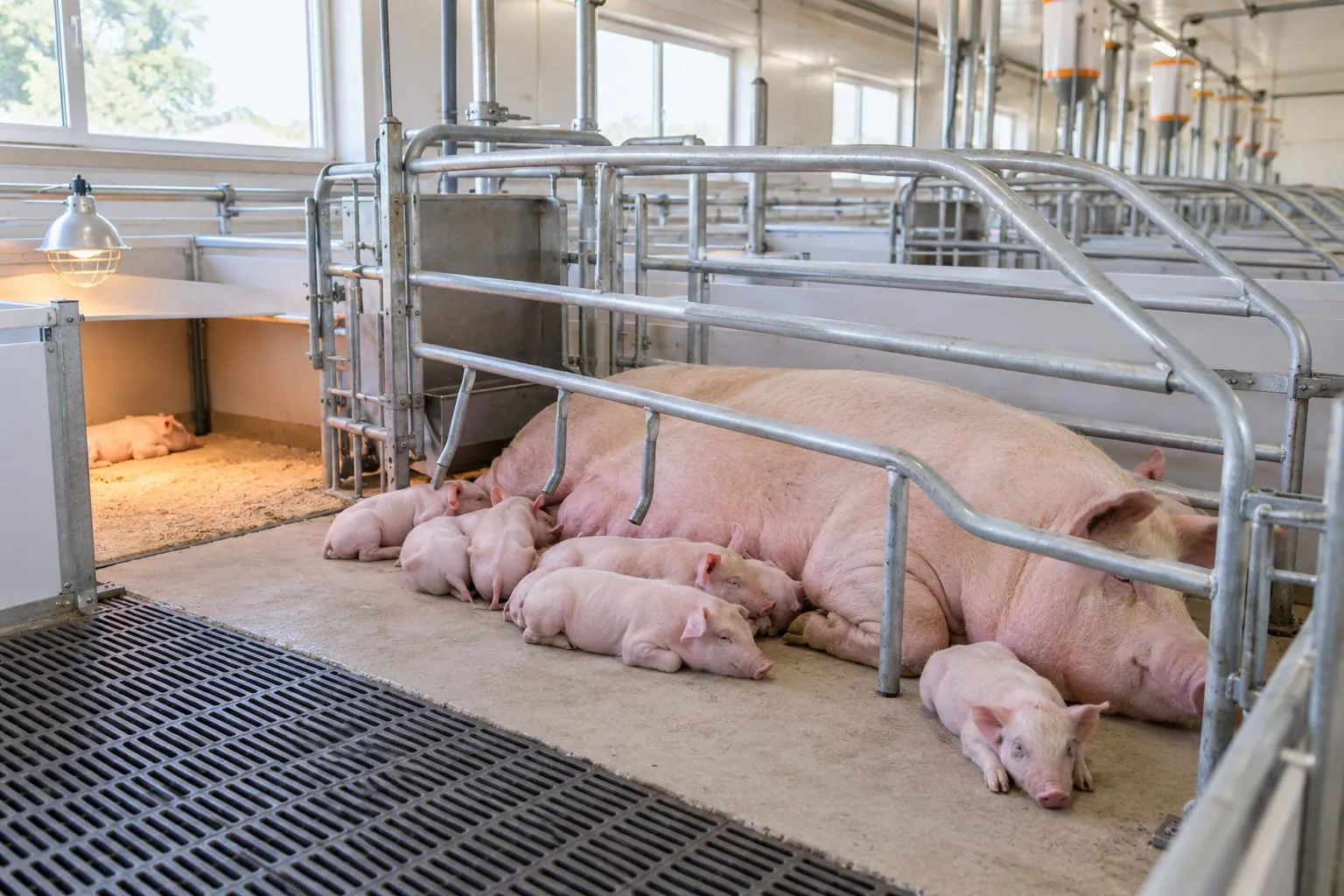
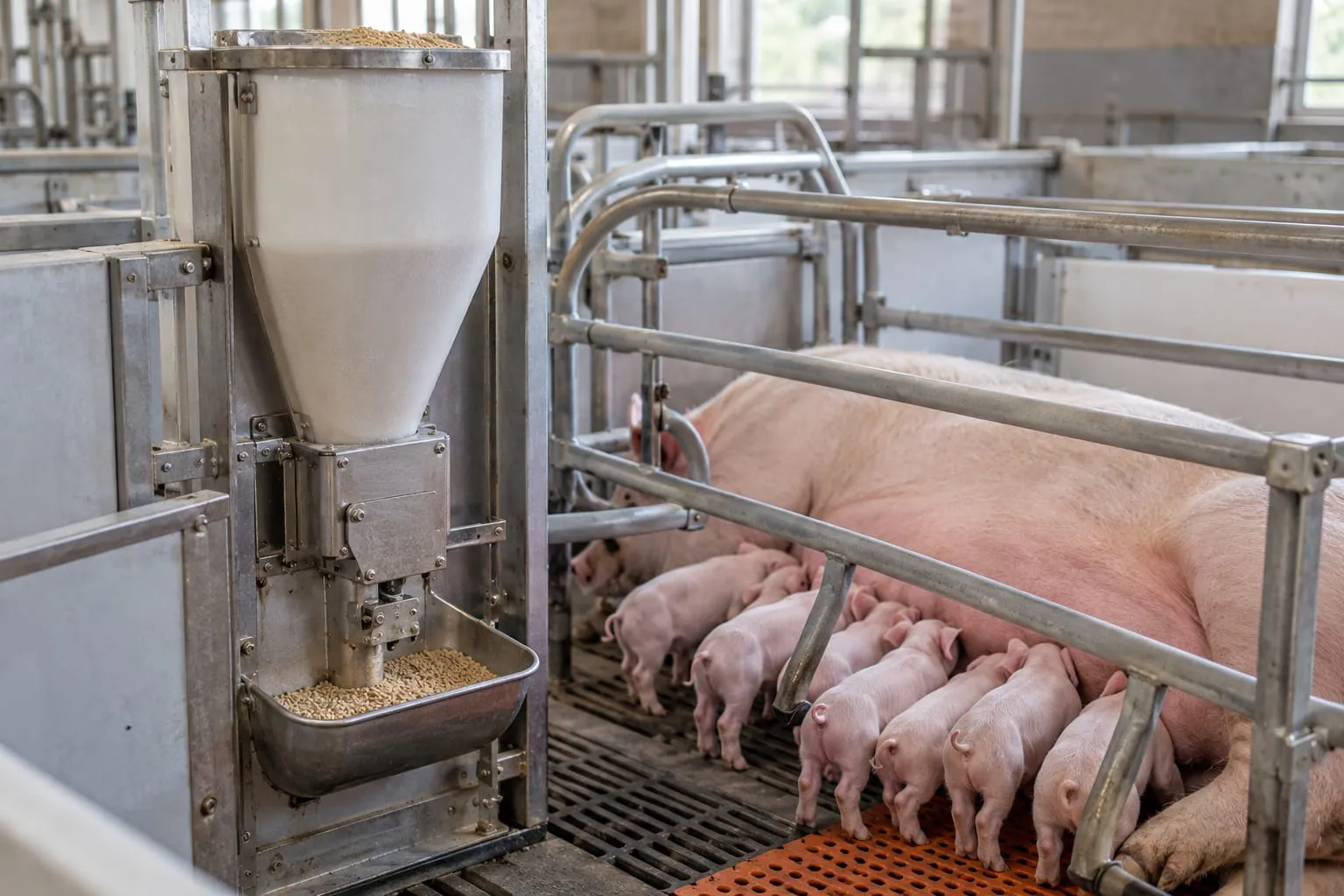
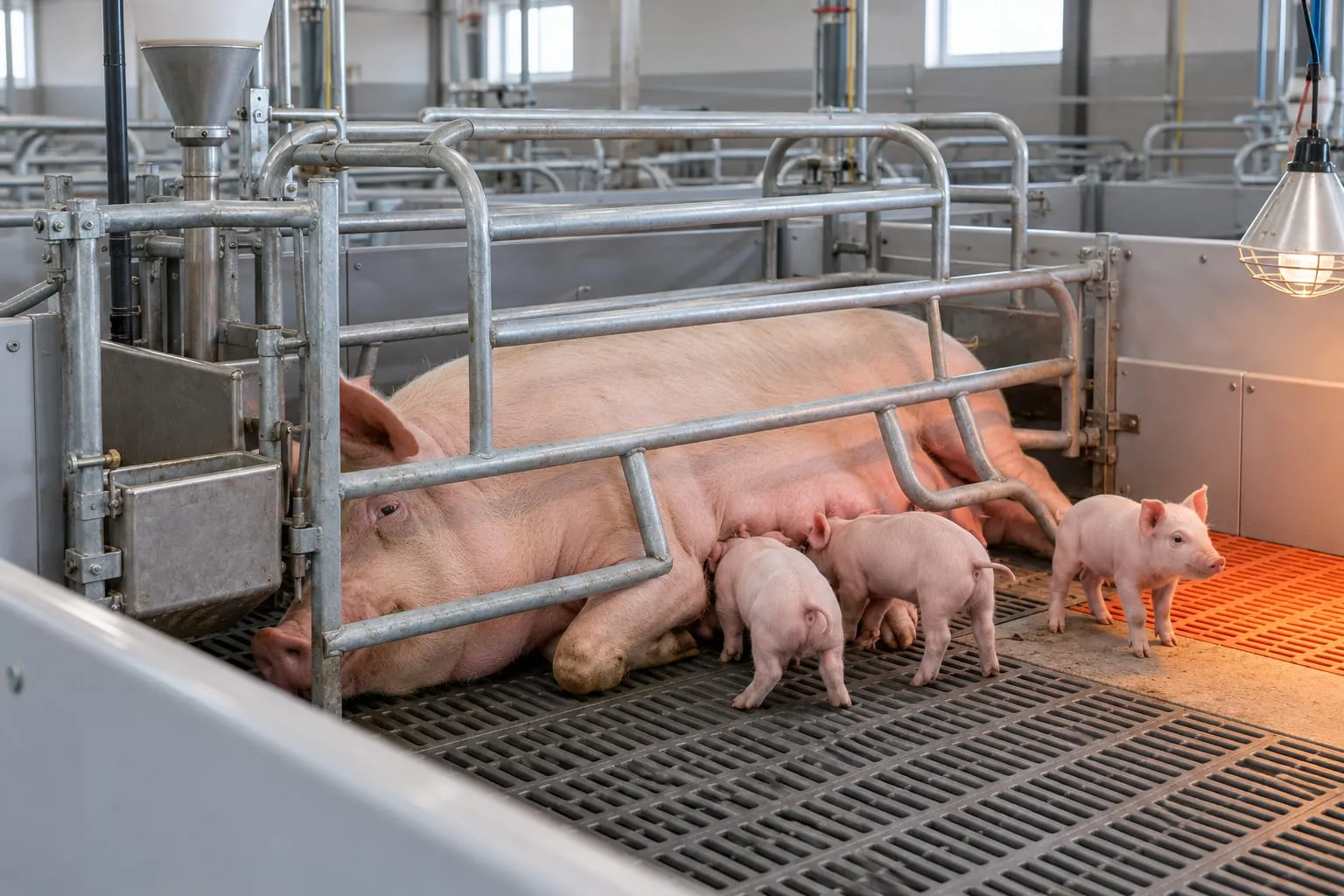
The farrowing house is where sows give birth and nurse their piglets until weaning. The room has to keep the sow comfortable, protect newborn piglets from crushing and chilling, and give staff safe access to both. Piglet survival in the first days decides a large share of the weaned pigs per sow, so the details of the pen matter.
Two climates in one room
Danish farrowing house guidance gives different targets for sow and piglets (Pig333, 2010):
| Animal | Temperature |
|---|---|
| Newborn piglet | about 34 °C at birth, falling to 28-30 °C at weaning |
| Sow | about 20-22 °C at farrowing, 15-16 °C by three to four weeks of lactation |
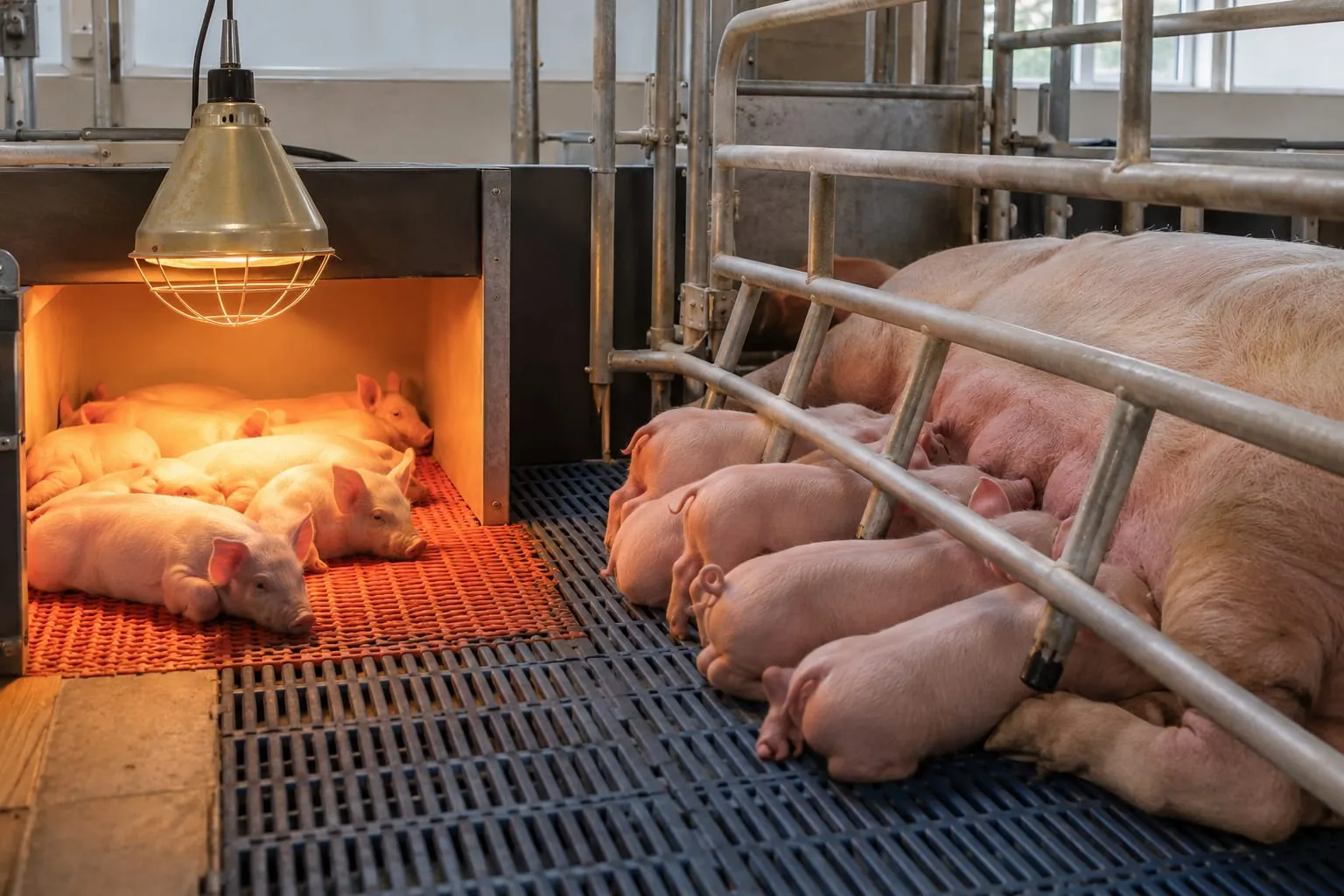
A lactating sow produces at least twice the heat of a pregnant one, so in warm weather she needs cooling while the piglets need warmth. This is why the room climate and the creep heat are planned together. See heat stress in pigs and piglet heating: heat lamps vs heat mats.
Crates or welfare pens
| Farrowing crate | Loose (welfare) pen | |
|---|---|---|
| Space | Compact | More space per sow |
| Piglet crushing | Lower | Depends on design and management |
| Sow freedom | Limited | Higher |
| Staff access | Easy | Needs good design |
| Market | Common in large commercial farms | Required or preferred in some markets |
The EU directive does not give a crate size. It requires an unobstructed area behind the sow for natural or assisted farrowing, protection for piglets in loose pens such as farrowing rails, and nesting material in the week before farrowing where technically feasible (Council Directive 2008/120/EC, Annex I, Chapter II). Choose by your rules, your customers and your management skills. Full comparison and sizes are in farrowing crate size and how to choose.
Pen and room dimensions
Reference values from Danish design advice for modern prolific sows:
- pen of about 2.7 × 1.8 m,
- crate 200-210 cm long, adjustable in width from 35 to 90 cm, with 20 cm behind the rear gate,
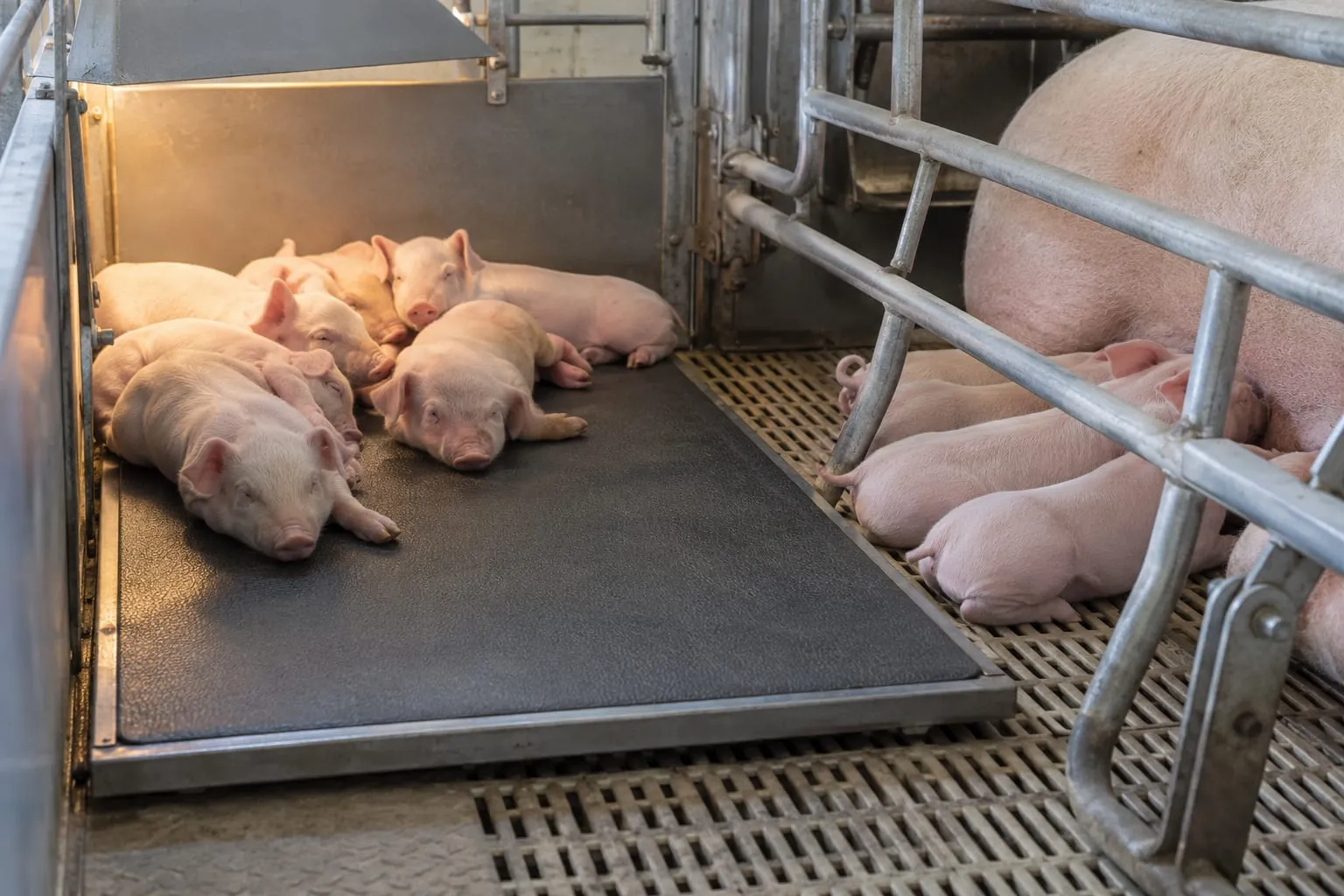
- covered creep area of 0.7-0.8 m² per litter,
- sow nipple drinker flow of 10-13 litres per minute, and a feed trough of at least 20 litres,
- noise kept below 85 dB(A).
Research summarised by North Carolina State University found that crate widths of 17 and 20 inches did not greatly affect piglet survival in large commercial studies, and that heavier, longer sows were linked to higher piglet mortality in several studies, so check crate length against your sows (NC State Extension, 2022).
Floor
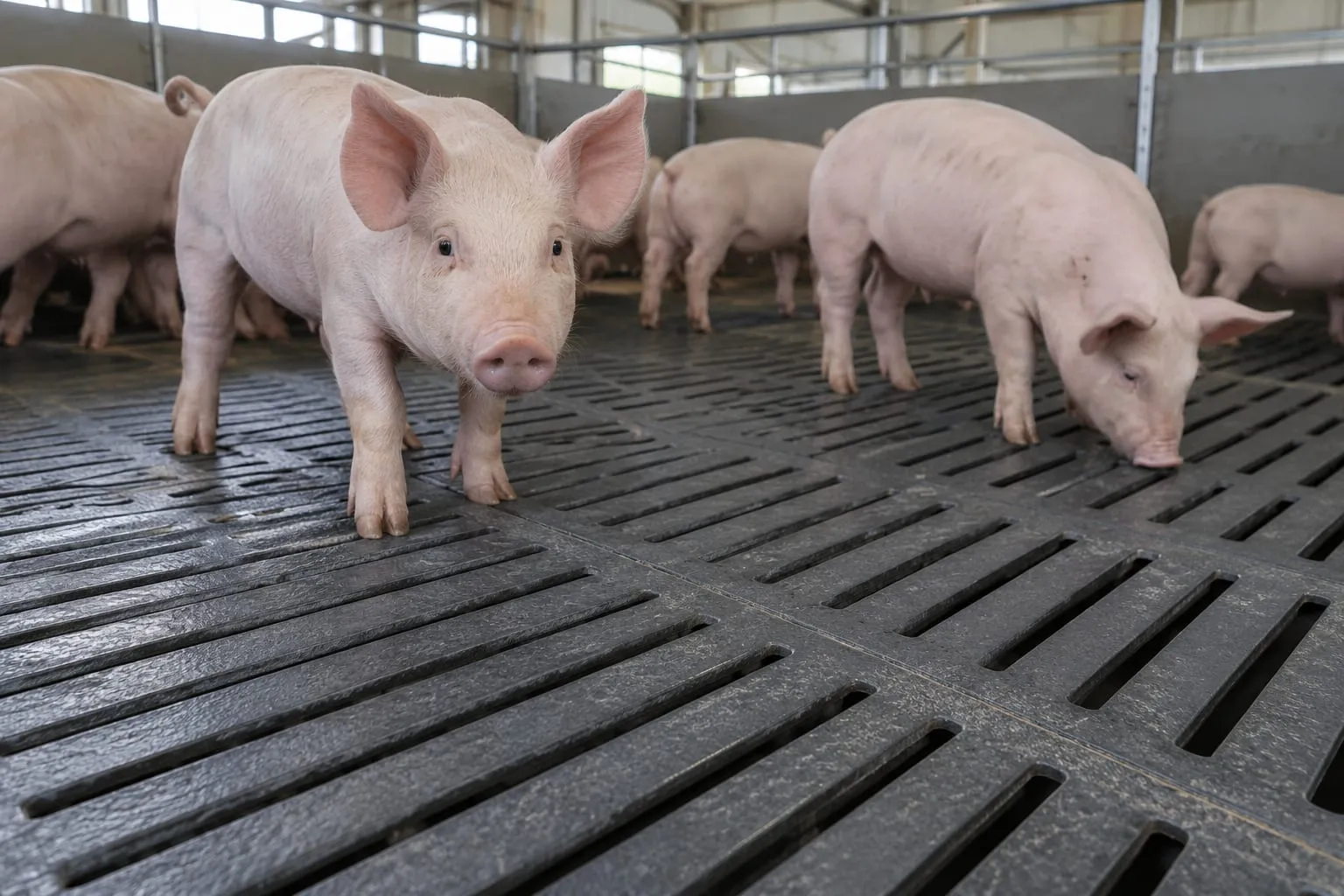
The floor must drain, give the sow grip and keep piglets warm and unharmed. Danish practice includes partly slatted pens with concrete under the sow and cast iron at the rear, and fully slatted pens with cast iron under the sow and plastic along the sides, with a non-slip sow area. The creep area needs a dry, warm surface, often solid or heated. See slatted floors for pigs, cast iron slatted floors and plastic slatted floors.
Creep heat
Two common options are heat lamps and heated mats, with covered microclimates as a third. An Iowa State pilot study compared a semi-enclosed heated microclimate with 125 W heat lamps in 24-stall rooms over six farrowing cycles. Daily gain did not differ, mortality from overlaying was 4.05% against 6.04% (statistically significant), and the microclimate used 3.25 kWh per day against about 6 kWh for the equivalent lamps (Smith et al., Animals, 2019). The authors’ literature summary says lamps and mats generally perform alike for gain and mortality, with mats using less energy. Details are in piglet heating: heat lamps vs heat mats. See piglet warming mats and heat lamps.
Feeding and water
The sow needs a feeder she can use at farrowing and during lactation, with enough water: nipples with a high flow, since lactating sows drink far more than other pigs. Precision farrowing feeders dose feed by sow and day. Piglets need a drinker and, later, creep feed. See pig drinking water systems.
Room layout and number of crates
Danish advice is to plan for five weeks of occupation per batch on a four-week weaning system, to run rooms all-in, all-out so they can be cleaned between batches, and to add 10-15% extra pens per room for foster sows. A room typically holds one batch; in the US approach, rooms of 20-24 sows are weaned 4-5 days a week.
With the example assumptions of the sow farm planning calculator (300 sows, 2.3 litters per sow per year, weekly batches, 28-day weaning), about 13 sows farrow each week and the house needs about 67 crates, or about 75 with a 12% fostering allowance. For a different herd, wean age or batch interval, enter your own figures.
Ventilation and climate control
Piglets are sensitive to draughts, and the room must still remove heat from the sow in warm weather. The ventilation plan sets minimum rates for the room, local heat for the piglets, and cooling where needed. See pig house ventilation design, environment controllers and climate control systems. Plan standby power and alarms for farrowing rooms: see backup power for pig houses.
Equipment in this house
- Pens: farrowing crates or welfare farrowing pens.
- Floor: cast iron and plastic slatted floors.
- Warmth: piglet warming mats and heat lamps.
- Feeding and water: precision farrowing feeders, drinkers and creep feeders.
A checklist before you build
- Crate or loose pen chosen against local rules and your customers
- Crate length and width checked against your sow size
- Creep area of 0.7-0.8 m² per litter with a controllable heat source
- Sow cooling and ventilation planned for the hottest weeks
- Floor that drains, grips and is safe for piglets
- Number of crates set from the batch plan, with a fostering allowance
- Rooms that can be emptied, cleaned and disinfected between batches
- Standby power and alarms
Ask an expert to plan your room
Send us the number of crates, your sow breed and your climate, and we propose a room layout and an equipment list through the contact page.