What the house does
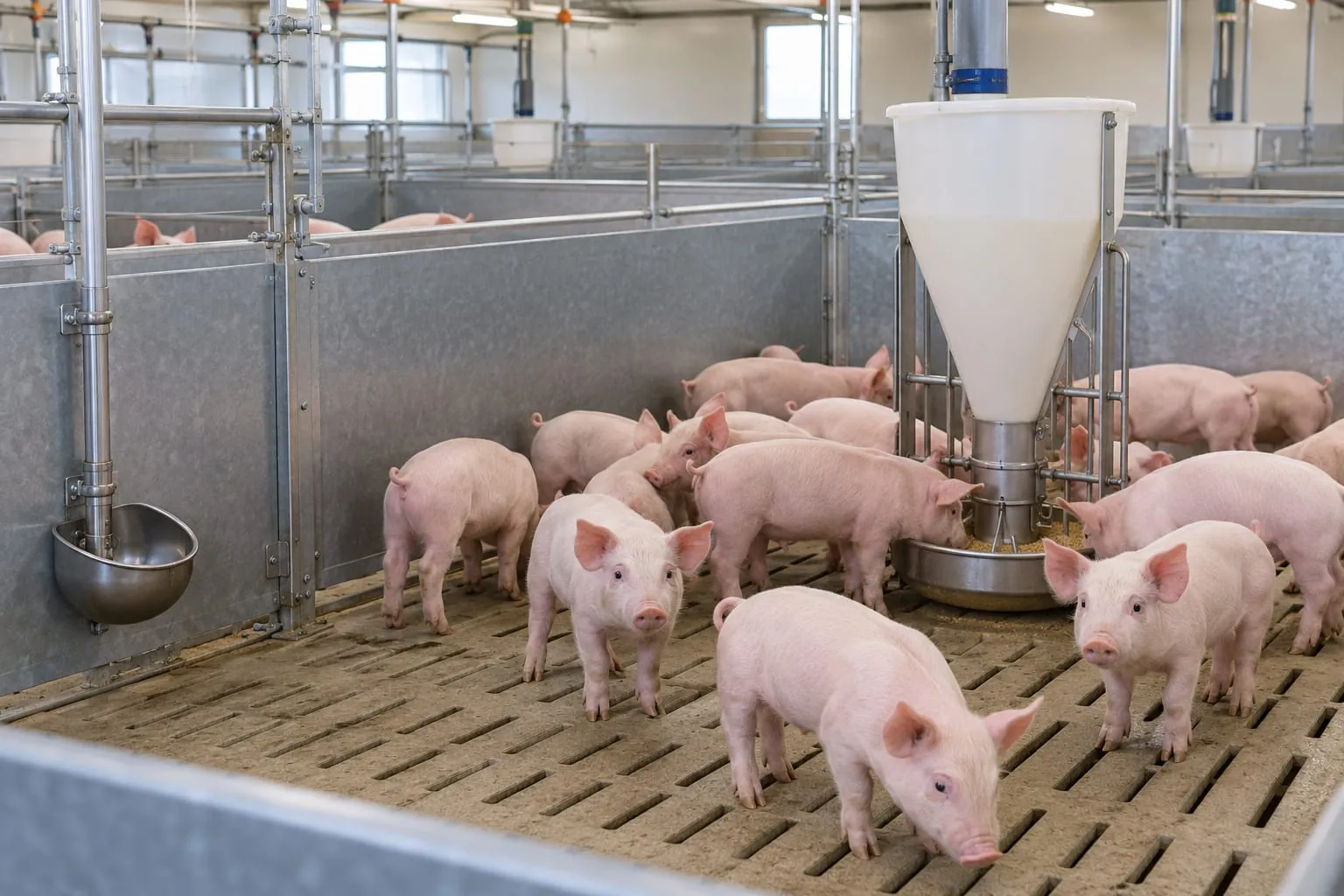
The nursery house takes piglets from weaning until they are ready for the finishing house. The first weeks after weaning are a sensitive period: piglets lose the sow’s milk, change to solid feed, move to a new pen and mix with new groups. Climate, feed access and clean water get special attention.
Weaning age and the move
The EU welfare directive does not allow weaning before 28 days unless the welfare or health of the sow or piglets would be harmed, and allows weaning up to seven days earlier into specialised, cleaned and disinfected housing separate from the sows (Council Directive 2008/120/EC, Annex I, Chapter II, C.3). The directive also asks that pigs be mixed as young as possible, ideally before or up to a week after weaning, with enough places to escape and hide, and that measures be taken to prevent fighting beyond normal behaviour (Annex I, Chapter II, D.2 and D.1).
Danish advice gives about 28-30 °C for piglets at weaning (Pig333, 2010), so the nursery should start at a similar level and be reduced as pigs grow, following a temperature curve in the controller.
Pen size and space
The minimum unobstructed floor area per pig in the EU directive (Article 3(1)):
| Live weight | Minimum floor area per pig |
|---|---|
| Up to 10 kg | 0.15 m² |
| More than 10 kg to 20 kg | 0.20 m² |
| More than 20 kg to 30 kg | 0.30 m² |
| More than 30 kg to 50 kg | 0.40 m² |
Design for the heaviest pigs that will be in the pen at the end of the stage. A worked example: a nursery that moves pigs out at 30 kg is sized at 0.30 m² per pig, so 600 pigs need about 180 m² of pen floor before alleys and walls. See space requirements per pig for the method.
Floor
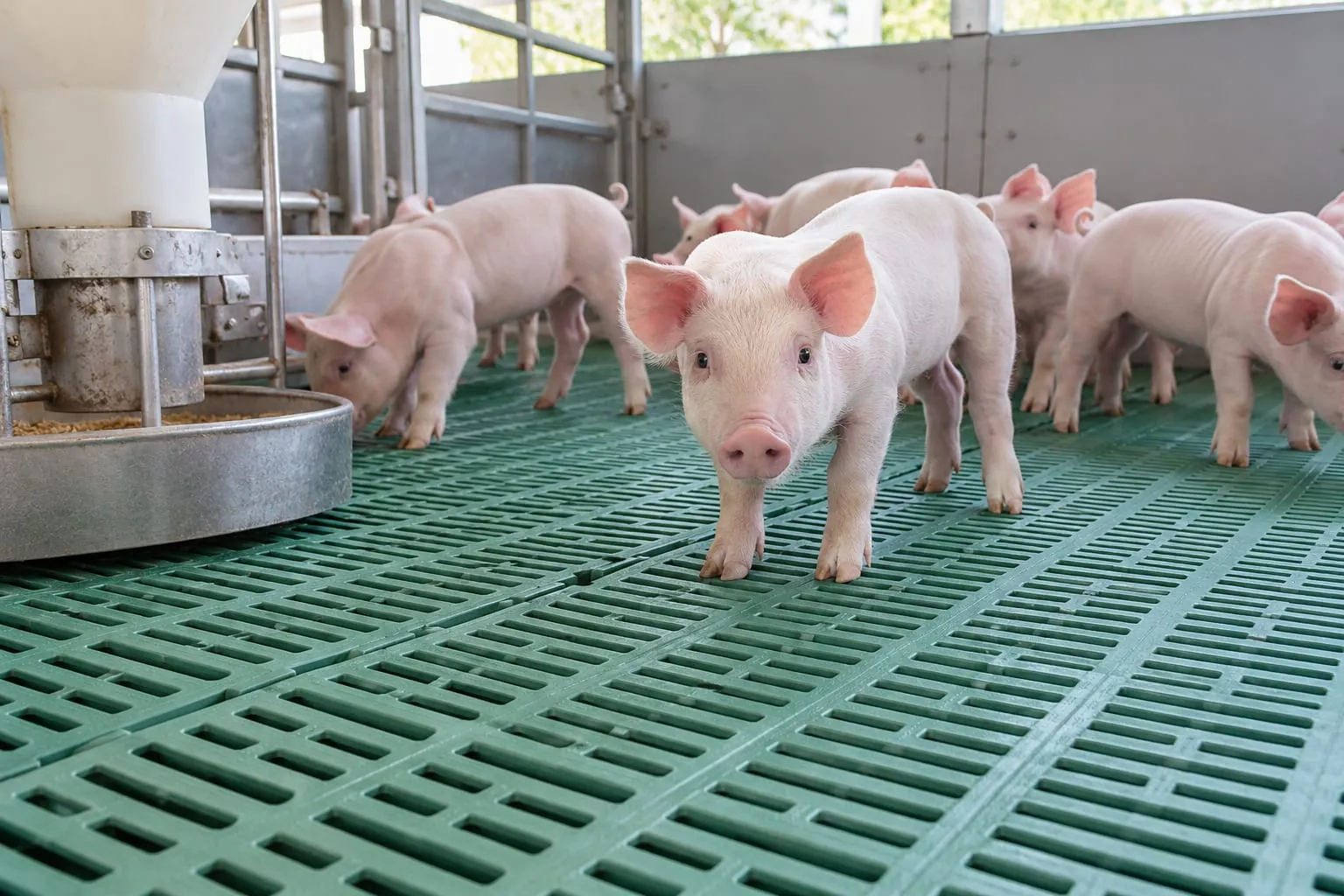
Plastic slatted floors are common in nurseries because they are lighter and warmer to lie on and easy to clean. For concrete slats under the EU directive, the openings must be at most 11 mm for piglets and 14 mm for weaners, and slats at least 50 mm wide (Article 3(2)(b)). Plastic and other slats have their own designs, so check the slot width and load rating for the smallest and largest pig that will use the pen. See slatted floors for pigs and plastic slatted floors.
Feed
Piglets move from the sow’s milk to solid feed. Practical points:
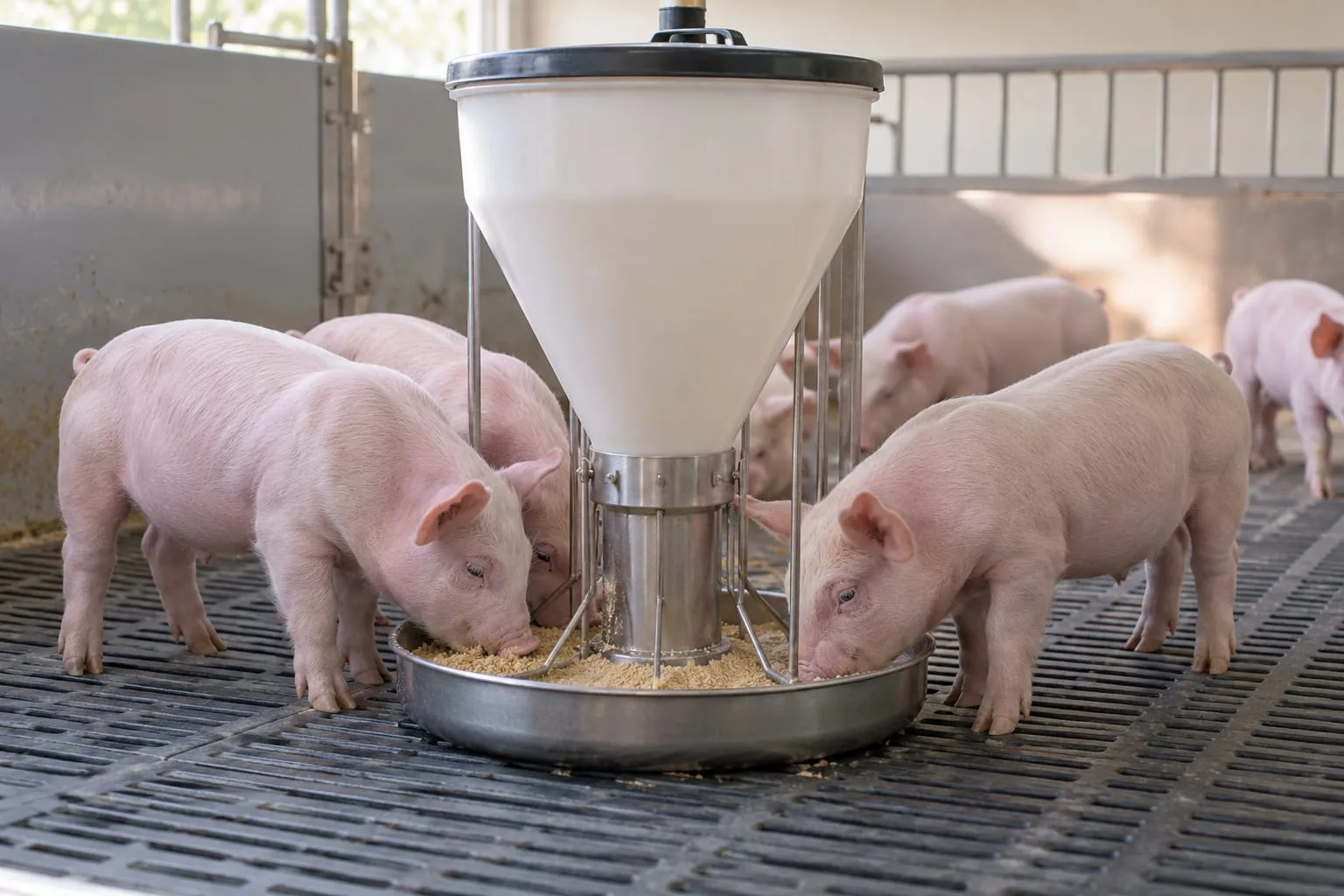
- Feeders at piglet height with enough feeding space, so every pig can eat; hopper feeders keep feed available. See creep feeders.
- Transition feed: piglets accept familiar feed more easily; plan the diet change with your nutritionist.
- Feed form: dry meal or pellets, or liquid. Evidence on liquid feeding for weaners is mixed: a review cited in an AURI report found a 12% higher daily gain for newly weaned pigs on liquid feed, while a University of Minnesota nursery study found higher gain with dry diets. See liquid feeding vs dry feeding for pigs and pelleted vs mash feed for pigs.
Water
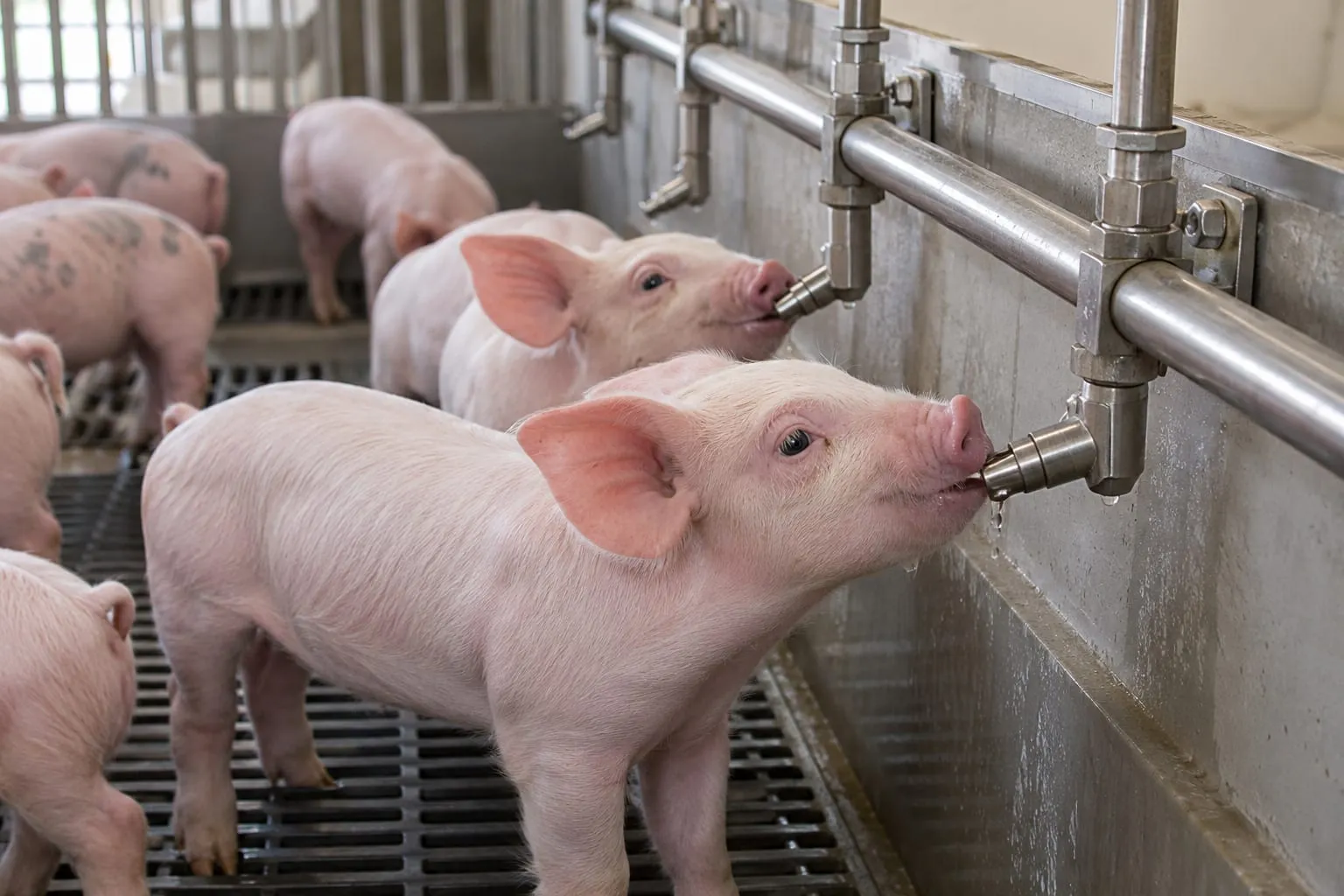
Water is essential in the first days after weaning. The Western Australia agriculture department gives about 3-5 litres per day for weaners, and an Agweek article cites nursery nipple flow targets of about 250-500 mL per minute and at least two working drinkers in pens of more than 10 pigs. Piglets must find and learn the drinkers quickly; bowls or low nipples can help. See pig drinking water systems.
Heating, ventilation and air
The nursery needs warmth at the start and steady fresh air at all times. The PIC ventilation guidelines give a minimum ventilation of 2.0 CFM per weaned pig (about 3.4 m³/h), rising to 3.0-4.5 CFM (about 5.1-7.6 m³/h) at 50-65 lb (23-29 kg), with humidity under 65% as a reference (PIC, 2025). A nursery of 1,000 weaned pigs at the lowest rate needs about 3,400 m³/h of minimum ventilation. Air should reach the pigs without a draught.
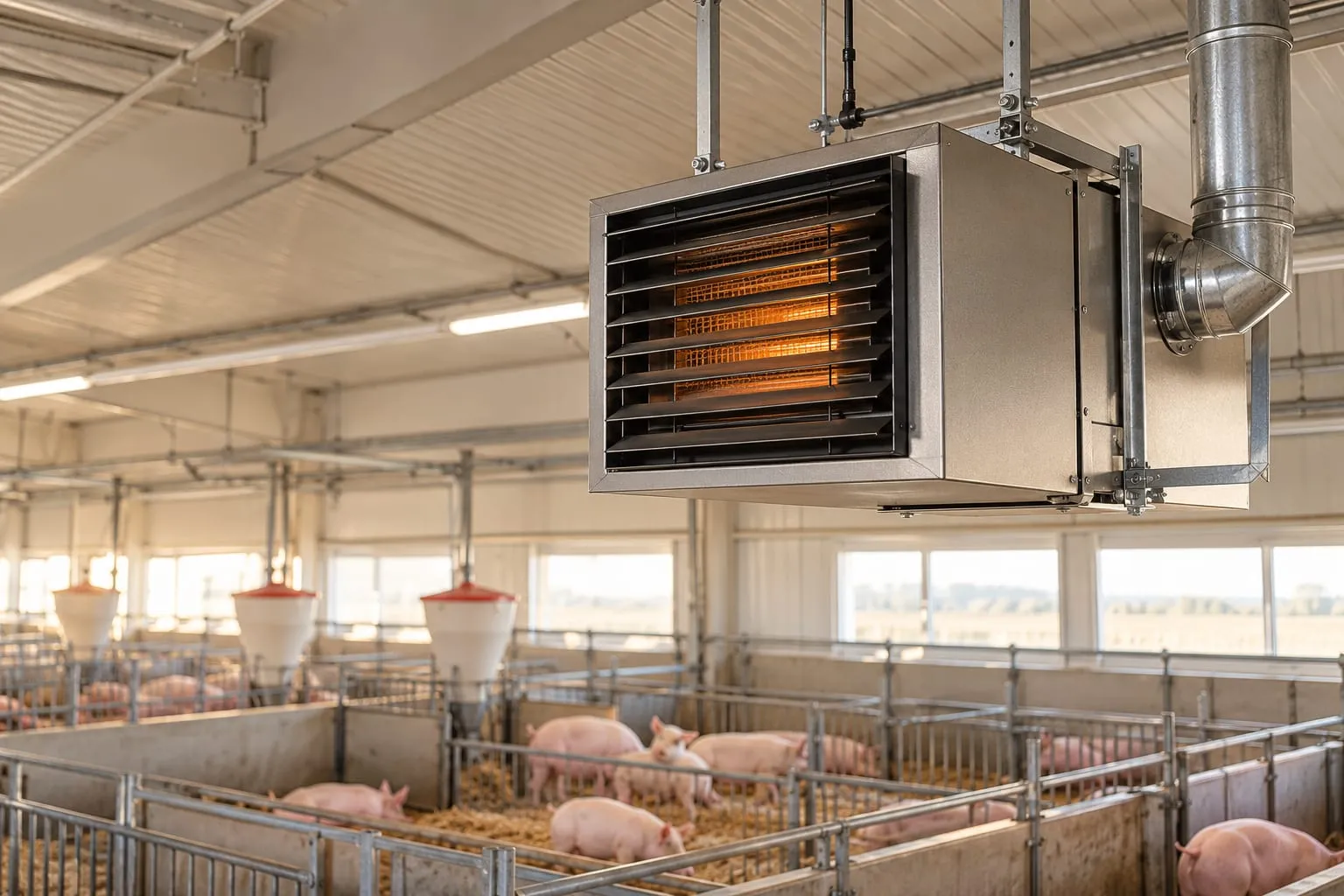
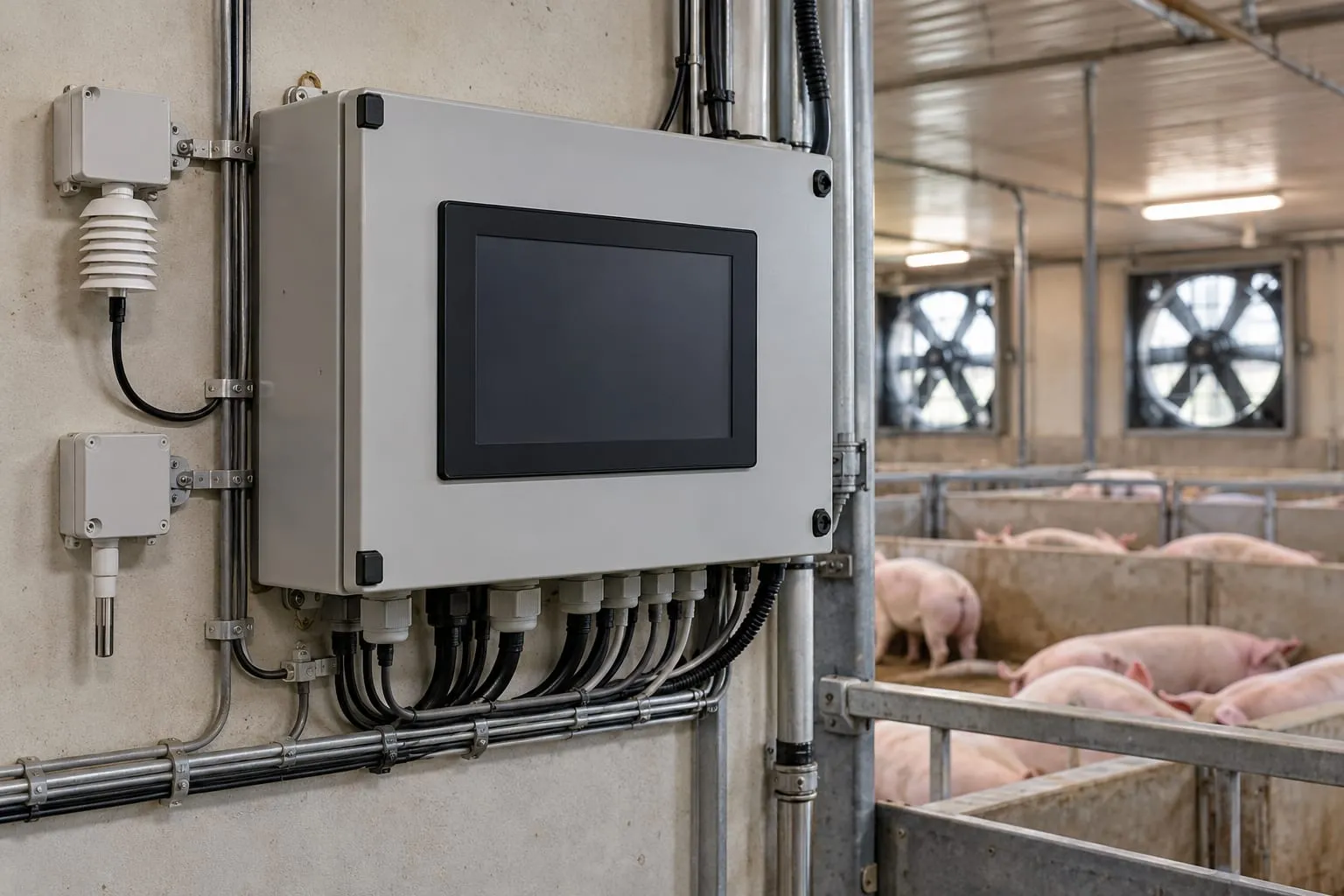
Plan heating for cold weather and cooling for hot weather, with a controller that follows a temperature curve by age. See pig house ventilation design, space heaters and environment controllers.
Layout and number of places
Run nursery rooms all-in, all-out, so each room can be emptied, cleaned and rested before the next group. The number of places follows from the batch plan: weaned piglets per batch times the batches a room is occupied. With the example assumptions of the sow farm planning calculator (300 sows, 11 weaned piglets per litter, weekly batches, six weeks in the nursery plus a cleaning week), about 146 piglets are weaned each week and the nursery needs about 1,020 places.
Some farms use wean-to-finish barns instead, where pigs stay from weaning to market. Extension sources list labour savings and easier all-in, all-out production against less flexibility and underused space at weaning unless pigs are double stocked. See pig farm business models compared.
Equipment in this house
- Nursery pens with plastic slatted floors.
- Creep feeders and nipple drinkers.
- Space heaters, fans and environment controllers.
A checklist before you build
- Pen size set from group size and the weight at transfer
- Slot widths and slat widths checked for the smallest and largest pigs
- Feeders and drinkers at piglet height, with enough space and flow
- Heating and cooling planned with a temperature curve by age
- Minimum ventilation set and checked by anemometer
- Rooms that can be emptied, cleaned and rested between batches
- Number of places checked against the batch plan
Ask an expert to plan your nursery
Tell us the number of piglets per batch and your climate, and we propose a nursery layout and an equipment list through the contact page.